

Martech
Growth Operations
Expand
Optimize performance and reduce technical debt. Ideal for efficiency and fine-tuning.


For ambitious entrepreneurs and business leaders, developing a robust growth strategy for scalability and expansion is paramount. However, securing the capital to execute those expansion plans is often a significant hurdle, especially for new startups and small businesses. This is where a government grant for small businesses can help.
By tapping into the right grant opportunities, growing startups and SMEs with revenue in Singapore can fund specific strategic growth initiatives, from new technology and tools to hiring and expanding into new markets. Grants support a funded growth plan; they do not replace one.
Let’s explore the key factors in developing a compelling growth strategy, and how it connects to government grants.
The first critical step is clearly defining what "growth" looks like for your specific company. This ensures your growth strategy and any grant application remain sharply focused on relevant, measurable targets rather than ambiguous "increase revenue" goals.
Growth is a process driven by strategy. It is achieved through multiple strategies implemented in various stages. Each subsequent strategy amplifies the achievements of the previous strategies. The misconception that there is a quick fix to sustainable growth is refutable.
When formulating a strategic growth plan, it's crucial to have well-defined objectives that align with your businesses’ specific vision, capabilities, and market positioning.
Driving top-line growth through increased sales is a universal objective, but simply stating "increase revenue" is too vague. Strategies need to quantify revenue goals like achieving $X million in Monthly Recurring Revenue (MRR) or $Y Million Annual Recurring Revenue (ARR) run-rates within set timeframes.
For many startups, accelerated customer/user growth is pivotal for rapidly capturing market share or building a critical base to unlock network effects. Growth plans should specify measurable targets like acquiring 1000 new customers per month/quarter or lowering customer acquisition costs below $200. This requires optimising marketing funnels, demand generation capabilities, conversion touchpoints, and customer onboarding experiences.
As startups experience rapid growth, maintaining output and quality while scaling resources becomes challenging. This spurs objectives around achieving non-linear efficiency gains through automation, systemisation, and optimising core workflows.
Metrics could include increasing transaction volumes by 75% without adding headcount, or reallocating 10% of resources from low-value tasks to higher priorities. Cloud infrastructure, process mining, digitisation, and RPA frequently enable such scalability plays.
Claiming market share from competitors by enhancing value propositions, vertical/horizontal expansions, or geographic moves.
For startups with innovative or disruptive offerings, aggressive strategies to claim market ownership become paramount. This may entail attacking incumbents' market share through superior value propositions, pricing tactics, or innovative models. Conversely, growth could stem from opening new verticals or regions where incumbents are absent or unprepared.
Investments in R&D and product development for new IP that disrupts categories or tenures competitive advantage.
On the R&D front, some startups' expansion centres on developing groundbreaking intellectual property that disrupts product categories or solidifies sustainable competitive advantages. Objectives emphasise accelerated product roadmaps with quantitative targets like releasing 4 new product lines within 3 quarters or even achieving $100 million revenue from new inventions.
Whichever objectives are prioritised, growth strategies must have distinct, quantifiable KPIs that define successful execution. Without such success metrics, efforts risk lacking focus and measurability, both crucial for strategic execution and for a strong grant application.
A well-crafted growth strategy often incorporates a combination of approaches tailored to the unique needs and circumstances of the business. It's worth examining certain organisations that experienced substantial growth by implementing seemingly minor tactics that ultimately yielded remarkable results.
The key takeaway is that sometimes, even small, targeted strategies can have a profound impact on an organisation's growth trajectory when implemented effectively and within the appropriate context.
Zapier
Zapier's business model revolves around integrating various tools and applications, enabling seamless communication and automation across a user's tech stack.
Zapier's ingenious solution was to leverage content marketing and create a vast resource library centred around the very tools and applications it integrates with. Whenever a new integration was added to Zapier, the team seized the opportunity to build authority and attract new audiences by publishing detailed guides and tutorials on the company's blog.
The blog's content spanned a wide range of topics, each meticulously crafted to cater to the specific needs and interests of different tool users. Articles like "How to Quickly Append Text to a Note in Evernote or OneNote from Your Browser" and "How to Automatically Generate Charts and Reports in Google Sheets and Docs" demonstrated Zapier's expertise and provided valuable insights to their target audiences.

This strategic approach allowed Zapier to position itself as a content hub for users of various tools and integrations, amplifying its reach and appeal as new integrations were added to the platform.
In the era before digital networking, professionals relied on physical business cards to maintain connections, a process that became cumbersome and outdated with changing contact information. LinkedIn revolutionised this concept by introducing an online platform for managing professional networks while leveraging the "six degrees of separation" principle to facilitate growth.
Early adopters likely recall receiving these emails: "So I [someone you know] found you while exploring the network. Let's connect directly; I'm happy to help you with requests and forward things incoming. It will probably make both of our networks bigger."
This cycle perpetuated itself as new users joined, and their contacts received the same email, enticing them to sign up.
The strategy shows the power of network effects in driving growth.
Businesses should continually explore innovative ways to tap into their existing customer networks, fostering a cyclical effect that draws in new users and expands the overall user base.
Not all growth strategies are created equal based on your startup's business model, target markets, and internal core competencies. These factors influence which approach has the highest probability of delivering results:
E-commerce, Software-as-a-Service (SaaS), and digitally-driven models generally have higher scalability potential compared to traditional brick-and-mortar or professional services models. This is because they can leverage technology and digital platforms to reach a broader customer base with relatively lower marginal costs.
For example, in the e-commerce space, businesses can rapidly expand their reach by optimising their online presence, leveraging marketing automation, and streamlining logistics and fulfilment processes. SaaS companies, on the other hand, can scale their customer base by enhancing their software offerings, improving user experiences, and implementing efficient customer acquisition and retention strategies.
To capitalise on their scalability potential, businesses with e-commerce, SaaS, or digitally-driven models should focus their strategies on:
By aligning their growth strategies with their business model's scalability potential, organisations can maximise their chances of success and capitalise on market opportunities effectively.
The Singapore government also supports startups and SMEs through grants. As of September 2026, EDG, MRA and PSG ceased on 29 September 2026, and businesses apply under the EDGE Grant from 30 September onwards. Source: the official EDGE Grant page.
The state of market demand and industry dynamics play a pivotal role in shaping growth strategies. These factors can dictate whether businesses should prioritise expansion, optimisation, or diversification.
In high-demand, upswing markets characterised by rapidly growing consumer interest and adoption, businesses should prioritise expansion strategies. This could involve:
However, in mature markets with stabilised demand, optimisation and diversification strategies become more prudent. During these phases, businesses should focus on:
Experienced consultants can provide valuable insights into market dynamics, consumer behaviour, and industry trends, enabling businesses to make informed decisions about their growth trajectory. By aligning strategies with market realities, businesses can effectively navigate changing landscapes and seize opportunities for sustainable growth.
If a business has a truly unique and defensible offering, such as a patented technology, a disruptive business model, or a strong brand equity, it should prioritise aggressive growth and market ownership strategies.
Growth strategies for businesses with unique offerings may include:
On the other hand, if a business operates in a highly competitive market with multiple players offering comparable products or services, the focus should shift towards cost optimisation and operational efficiency. In such scenarios, the ability to deliver superior value at competitive prices becomes the key differentiator.
Experienced consultants can provide valuable insights into the competitive landscape, helping businesses assess their positioning and develop strategies that align with their unique strengths and market realities. Regular competitive analysis, market research, and customer feedback are also essential to stay informed about industry dynamics and adapt growth strategies accordingly.
Strategic growth objectives and trajectory factors are interrelated. The insights derived from this analysis phase inform whether you should pursue growth opportunities more capital intensive like new market penetration or lower net new investment approaches like optimisation and customer base expansion in existing segments. With this framing, you can now prioritise which grant programmes align to capital needs.
Grants help raise non-dilutive capital. Some programmes suit larger investments such as R&D and expansion, while others support specific initiatives such as process automation or marketing technology. Check the official page of each grant for what it covers.
Many startups understand that grants can reduce capital risk, but struggle to build a growth plan that holds up to scrutiny.
A fundable growth plan addresses two themes: Strategic Relevance and Execution Viability. Both are covered below.
Here your growth plans must show direct alignment with the specific grant programme's objectives (market penetration, business transformation, R&D commercialisation, etc). Articulating the startup's value proposition, target markets, and differentiated IP/capabilities builds credibility.
But robust strategies go further through:
This shows your operational capability to use funds responsibly and in line with the proposed strategy. Key factors include:
Of course, the true success measurement of any grant isn't just the award itself, but tangible results generated through strategic utilisation and execution. Grant capital must accelerate growth in alignment with defined objectives, be it capturing market share, accelerating sales cycles, or enhancing productivity.
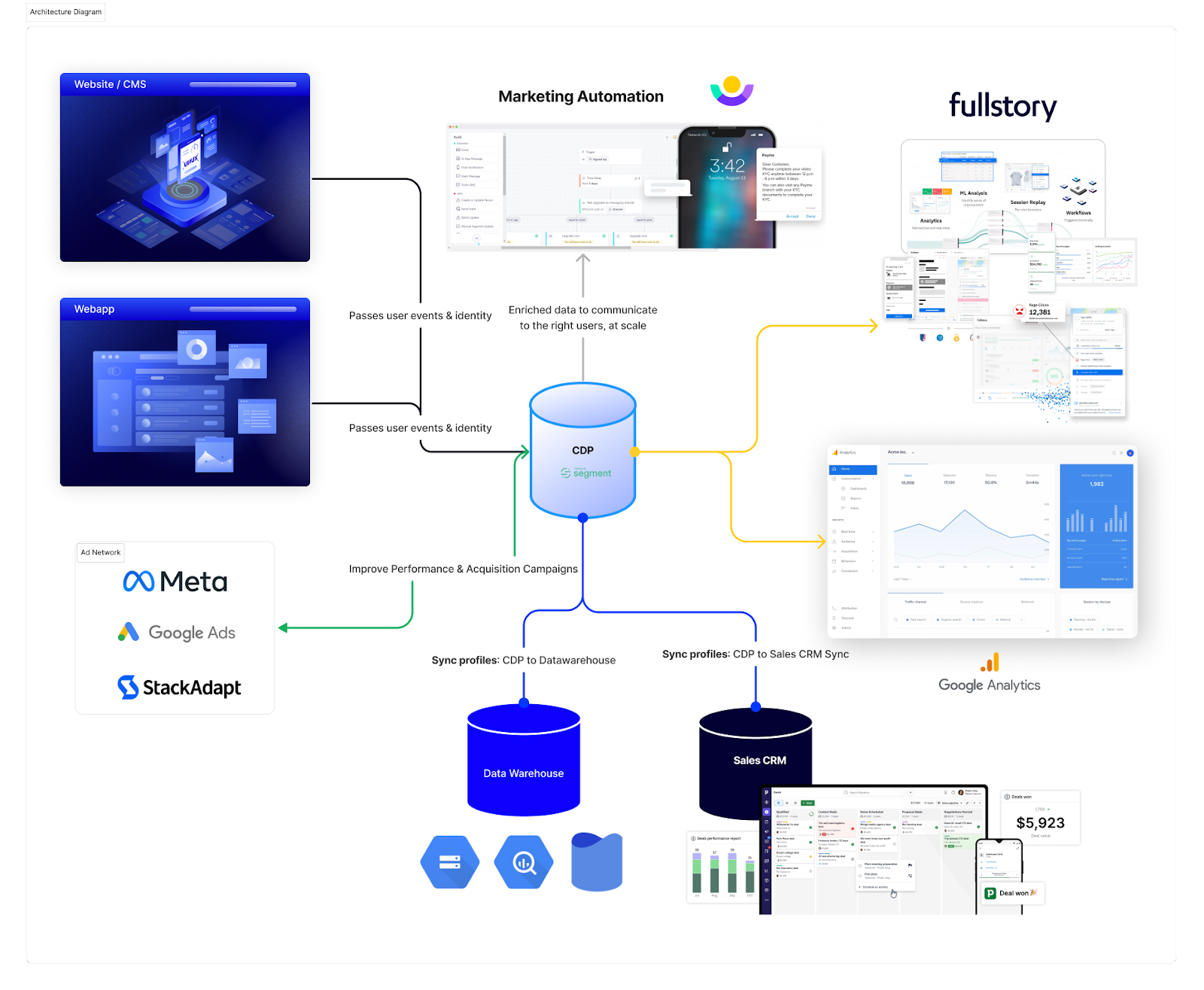
Admiral Systems specialises in architecting cutting-edge marketing technology ecosystems aligning granular data, behavioural intelligence, and multi-channel engagement capabilities. This amplifies marketing ROI and customer acquisition power for startups pursuing aggressive user growth and top-line expansion.
By deploying intelligent process automation and robotic process automation platforms, legacy manual overheads are systematically eliminated. The resulting efficiency gains accelerate throughput and bottom-line growth potential.
Sophisticated data pipelines and visualisation platforms unlock thorough business intelligence. This fuels smarter decision-making, precise audience targeting, and optimal capital allocation across growth programs.
In essence, a Build from Admiral Systems turns a growth strategy into working marketing technology, automation and analytics.
While financial constraints pose risks to startup growth, Singapore's government grants can support well-planned expansion.
Our core strength lies in the ability to configure future-proof "growth stacks" of martech and data infrastructure, empowering our clients to navigate the complexities of the digital landscape with confidence and precision. Through these meticulously crafted growth stacks, we enable series-extending revenue momentum by expanding channels and creating seamless omnichannel experiences that resonate with customers on a profound level.
Start with a Blueprint, a paid diagnosis that ends with a costed plan for your growth strategy.
Find the right engagement fit for your current need(s)
Go to Market
Consulting
Validate ideas with market research, strategic planning and prototyping. Ideal for exploring new concepts.
Martech
Implementation
Launch Low-code MVP or Custom Interactive websites with user-focused design. Perfect for quick market entry.
Growth & Marketing
Campaign Experimentation
Boost growth with scalable systems and marketing automation. Suited for advanced analytics and more.
For teams with a bigger appetite for growth
Martech
Transformation
Transform with system modernization and integration. Best for comprehensive digital change.
Martech
Growth Operations
Optimize performance and reduce technical debt. Ideal for efficiency and fine-tuning.

Enterprise Singapore sets the rules and can change them. In general, you need all three of these before your project is assessed.

The grant is run by Enterprise Singapore for companies registered and operating here.

You need to have sufficient funds available to pay for the entire project upfront.

You need a defined project with real deliverables, dates, and outcomes.














We can't wait to hear all about your game-changing ideas. Spill the tea!

Be the first to know on further updates on Growth contents for your organisation, don't miss out on our sneak peaks and exclusive community contents!