Martech
Growth Operations
Expand
Optimize performance and reduce technical debt. Ideal for efficiency and fine-tuning.

Cookies are still around: they remember logins, shopping cart items and site settings. What differs is where the data is sent and how it is processed. First-party data comes to you as collected, while third-party data is pre-processed by a third party that guesses who the visitor is.
Google planned to phase out third-party cookies in Chrome, then changed course in July 2024. In April 2025 it confirmed that Chrome keeps its current approach: users choose in Chrome’s settings, and Incognito mode already blocks third-party cookies by default. Safari began blocking them by default in 2020, and Firefox began confining them to the site that created them in 2022.
This shift highlights the reliance on first-party data, which offers a more reasonable and privacy-friendly approach to understanding customer behaviour.
Companies need to adapt by strengthening their data collection strategies to ensure they continue to deliver personalised experiences without the use of third-party cookies.
In this article, we explain what cookies are, how first-party and third-party cookies differ, and what these browser changes mean for your day-to-day marketing.
Cookies are still around.
We’re still using it on a daily basis, and each Cookie still plays a fundamental role on our daily operations.
So what are Cookies? And how does it impact our online activities?

According to the Mozilla Development Network Documentation, A Cookie (or browser cookie or web cookie) is:
“a small piece of data a server sends to a user's web browser. The browser may store cookies, create new cookies, modify existing ones, and send them back to the same server with later requests. Cookies enable web applications to store limited amounts of data and remember state information”
It’s a mouthful, but here’s the TL;DR version; a Cookie:

In the case of cookies, the most common uses are:
Even though every Cookie might look the same, where the cookies are sent and how it is processed will make a huge difference on how you would track everyone which comes to your website.
For the sake of simplicity, here’s a table of comparison on how both are very different:
Difference First-party Data/First-party Cookies Third-party Data/Third-party Cookies Extra Notes Where data is sent to? To you! To the third-party, then to you. While both are sent to the respective platforms, the data which you receive in a form of first-party-data is as-is. Is data received has been “pre-processed”? No Yes How do you know who is coming to your website? Entirely on user behaviour and form submissions. Based on data gathered by the third-party Does the platform “guess” who the person is? No Yes What is the accuracy of the data? High, if set up well. Less than 100% Because third-party platform pre-processes the data, misattribution might happen with third-party data. Benefits of remarketing with a certain type of data You control the whole remarketing process, since you gather your data. The third-party controls the data instead of you; means, less flexibility.
To make it even simpler, I present you both use-cases about first-party and third-party data below.
Have you ever wondered how Google knows what are the gender of the person coming to your website, which age range the person is, or which country the person comes from?
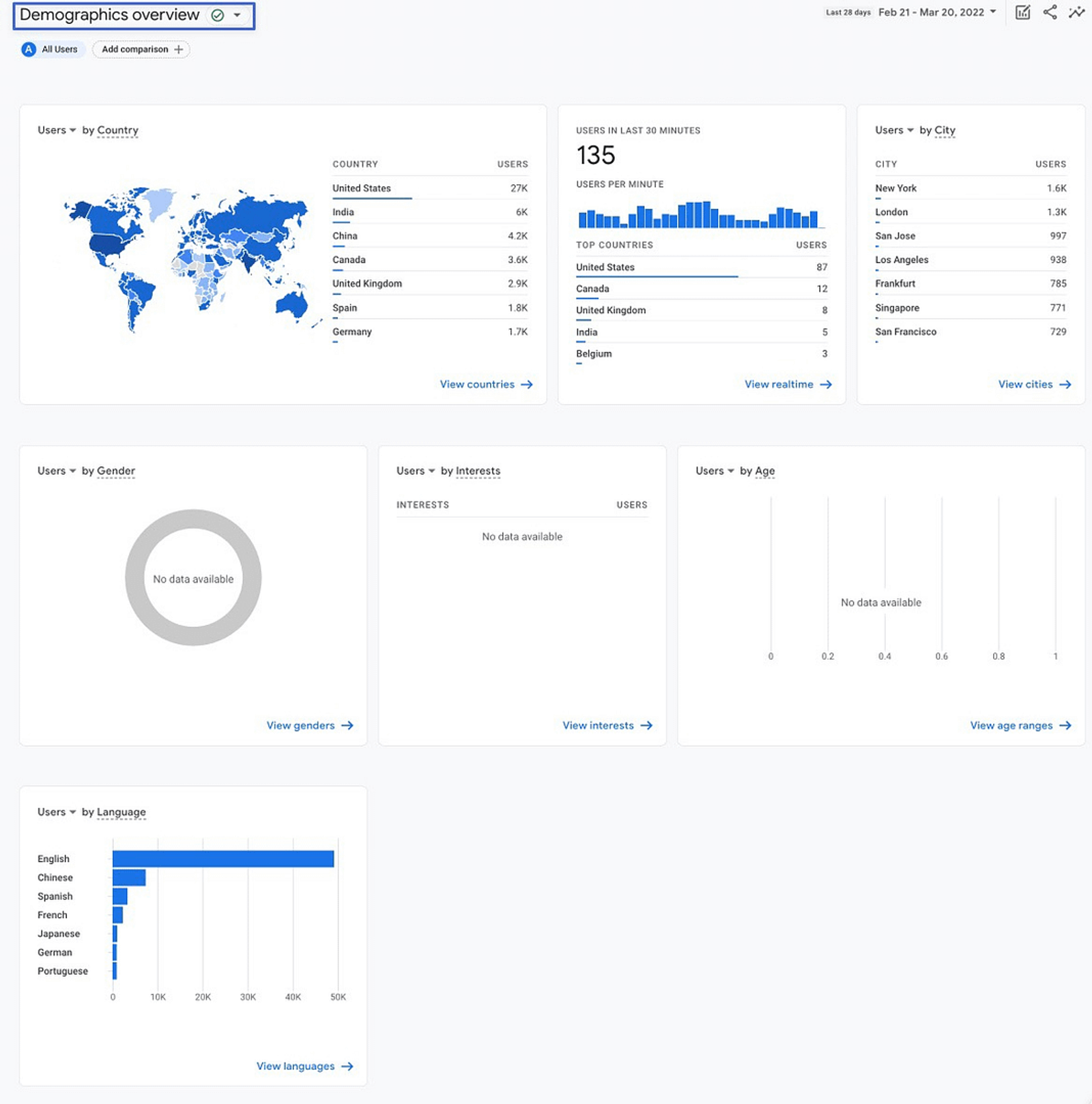
This is because Google re-uses the identification (in this case, cookies) and data from signed-in Google accounts to make an educated guess who the person is and where the person comes from.
Even though the person comes to your website completely anonymous/without submitting any personal information, Google may still estimate their age and interests, if they are signed in to Google with Ads personalisation on.
This approach, however, is not without any problems.
Because Google is guessing your visitors' identity, your data will never be 100% correct.
Imagine the case of John, who made a purchase on a website (which is not made of yours) through Google Ads in 2017 while residing in Switzerland.
Google's third-party data recorded John's location as Switzerland.
Years later, John relocates to Singapore. If Google has no newer signal, it may still place John in Switzerland.
This inaccuracy can lead to misleading marketing strategies and ineffective decisions; because the data no longer reflects John's current situation.
Do take note that this example is an oversimplification. But the point stays the same, you cannot rely 100% on third-party data, especially for your marketing purposes.
Segment, a Customer Data Platform, can track the movements of your website visitors.
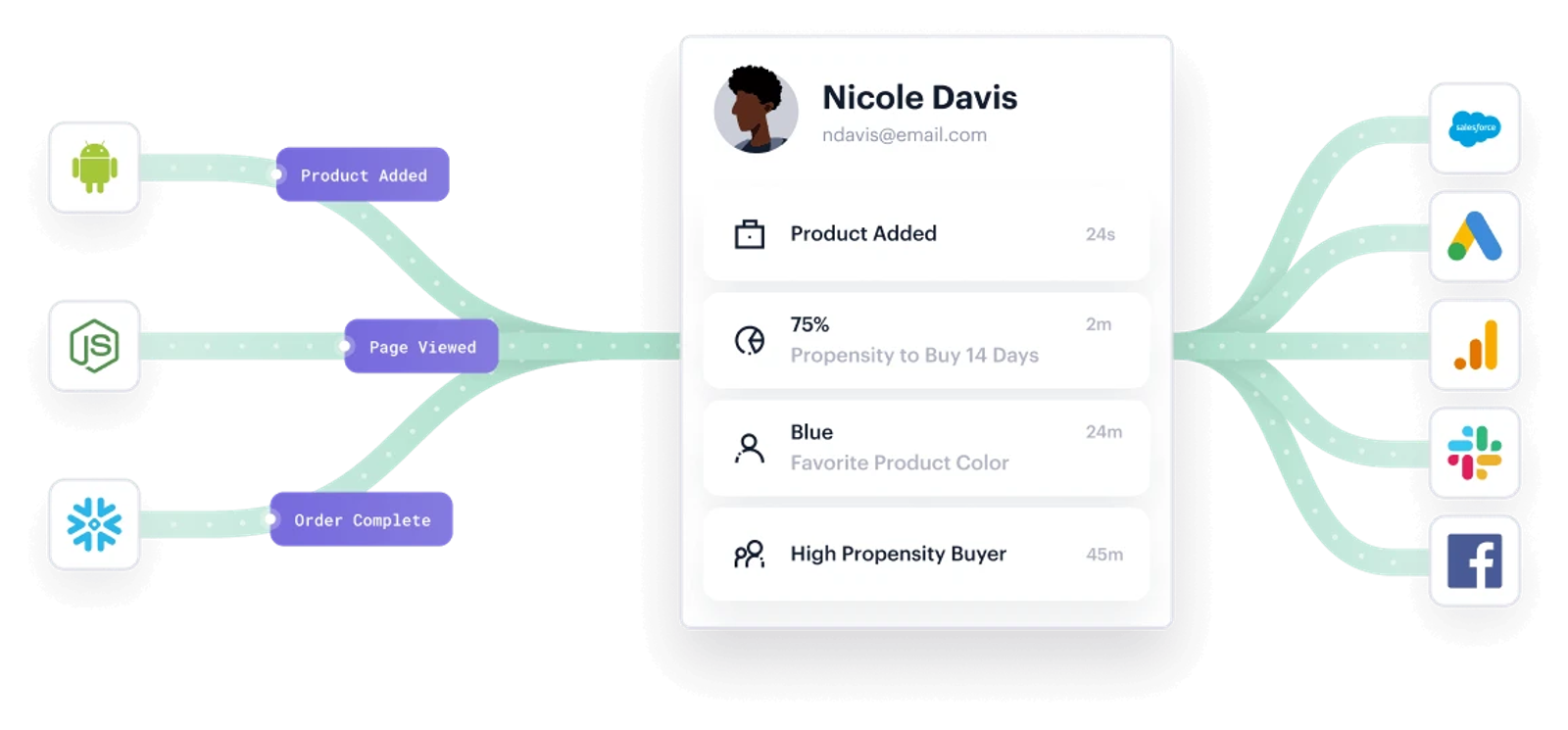
The way Segment works is by collecting data directly from your website and applications through a piece of code you implement. This data can include page views, button clicks, form submissions, and even purchases.
Unlike Google Analytics, Segment doesn't try to guess who the user is.
Instead, it relies on unique identifiers assigned to each visitor (folks at Segment call it “Anonymous ID”). This allows you to track individual user journeys across your platforms and gain a deeper understanding of their behaviour without relying on third-party cookies.
For example, you can see that a specific user, identified by an Anonymous ID, visited your blog post on "First-Party Data," downloaded a related blueprint, and then signed up for your newsletter. This granular level of detail allows you to personalise their experience better, such as sending them targeted emails and ads based on their liking.
Third-party cookies are no longer a dependable base for marketing. Safari and Firefox began restricting them in 2020 and 2022, and Chrome users can turn them off. This presents challenges, but it is also an opportunity to prioritise a more sustainable and privacy-focused approach to data collection.
By focusing on first-party data, businesses can build direct relationships with their customers, gain a deeper understanding of their needs, and deliver more personalised experiences. This not only improves marketing effectiveness but also fosters trust and loyalty.
Investing in a robust first-party data strategy is no longer optional; it's essential for thriving while Safari and Firefox restrict third-party cookies. Tools like Segment CDP can help you collect, organise, and activate your first-party data, enabling you to personalise your marketing efforts and build stronger customer relationships.
Having a hard time implementing your CDP for your marketing purposes? Reach us out at our Enquiry form and we will get back to you!
Find the right engagement fit for your current need(s)
Go to Market
Consulting
Validate ideas with market research, strategic planning and prototyping. Ideal for exploring new concepts.
Martech
Implementation
Launch Low-code MVP or Custom Interactive websites with user-focused design. Perfect for quick market entry.
Growth & Marketing
Campaign Experimentation
Boost growth with scalable systems and marketing automation. Suited for advanced analytics and more.
For teams with a bigger appetite for growth
Martech
Transformation
Transform with system modernization and integration. Best for comprehensive digital change.
Martech
Growth Operations
Optimize performance and reduce technical debt. Ideal for efficiency and fine-tuning.

Enterprise Singapore sets the rules and can change them. In general, you need all three of these before your project is assessed.

The grant is run by Enterprise Singapore for companies registered and operating here.

You need to have sufficient funds available to pay for the entire project upfront.

You need a defined project with real deliverables, dates, and outcomes.














We can't wait to hear all about your game-changing ideas. Spill the tea!

Be the first to know on further updates on Growth contents for your organisation, don't miss out on our sneak peaks and exclusive community contents!