Martech
Growth Operations
Expand
Optimize performance and reduce technical debt. Ideal for efficiency and fine-tuning.

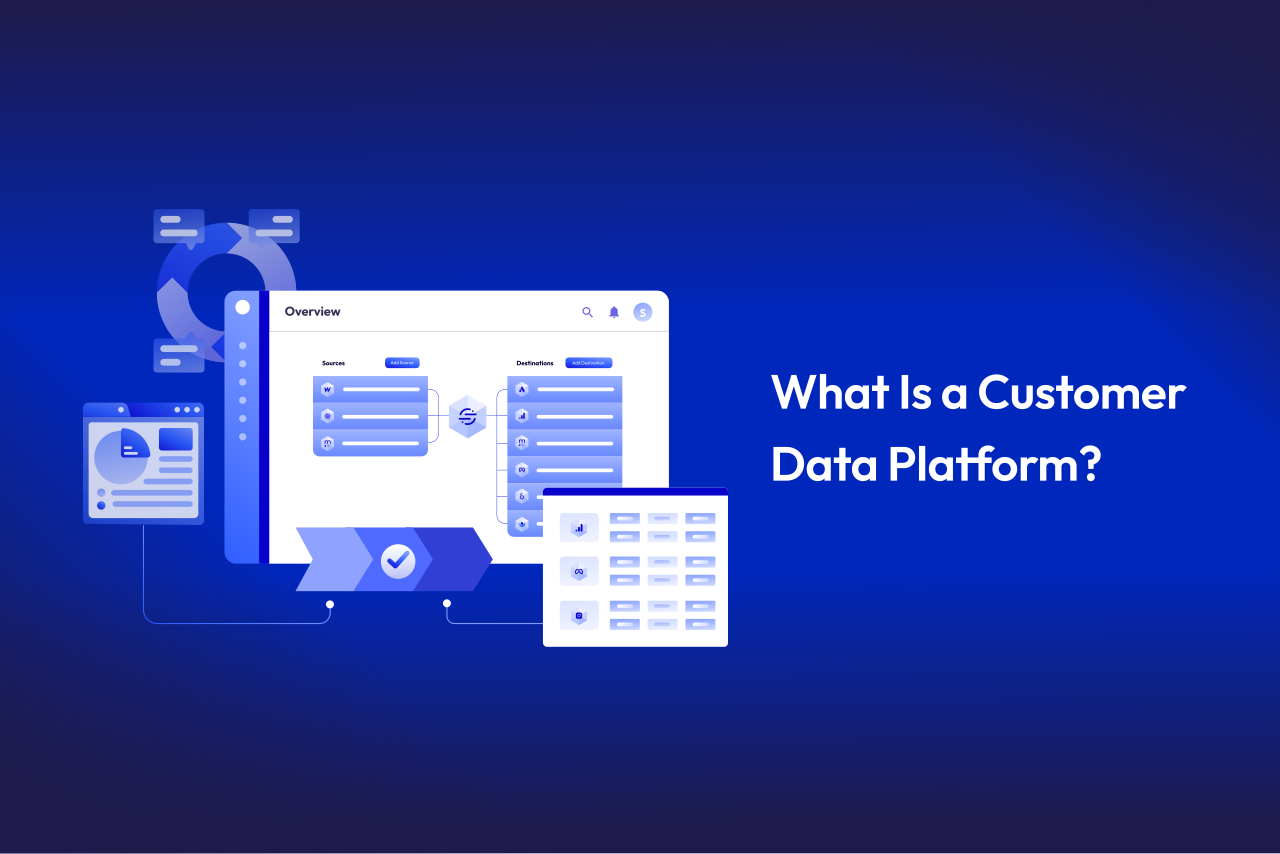
A customer data platform is a single source of truth for customer data. It collects and unifies first-party customer data from multiple sources into a single, complete view of each customer, then makes that data available to marketers for targeted, personalised campaigns.
Customer data platforms have become a hot topic. They're the latest method for gathering data about customers and using that information to make decisions that improve how businesses interact with their audience.
But what exactly is a CDP? How does it work? And why do you need one?
In this guide, we'll explain everything you need to know.
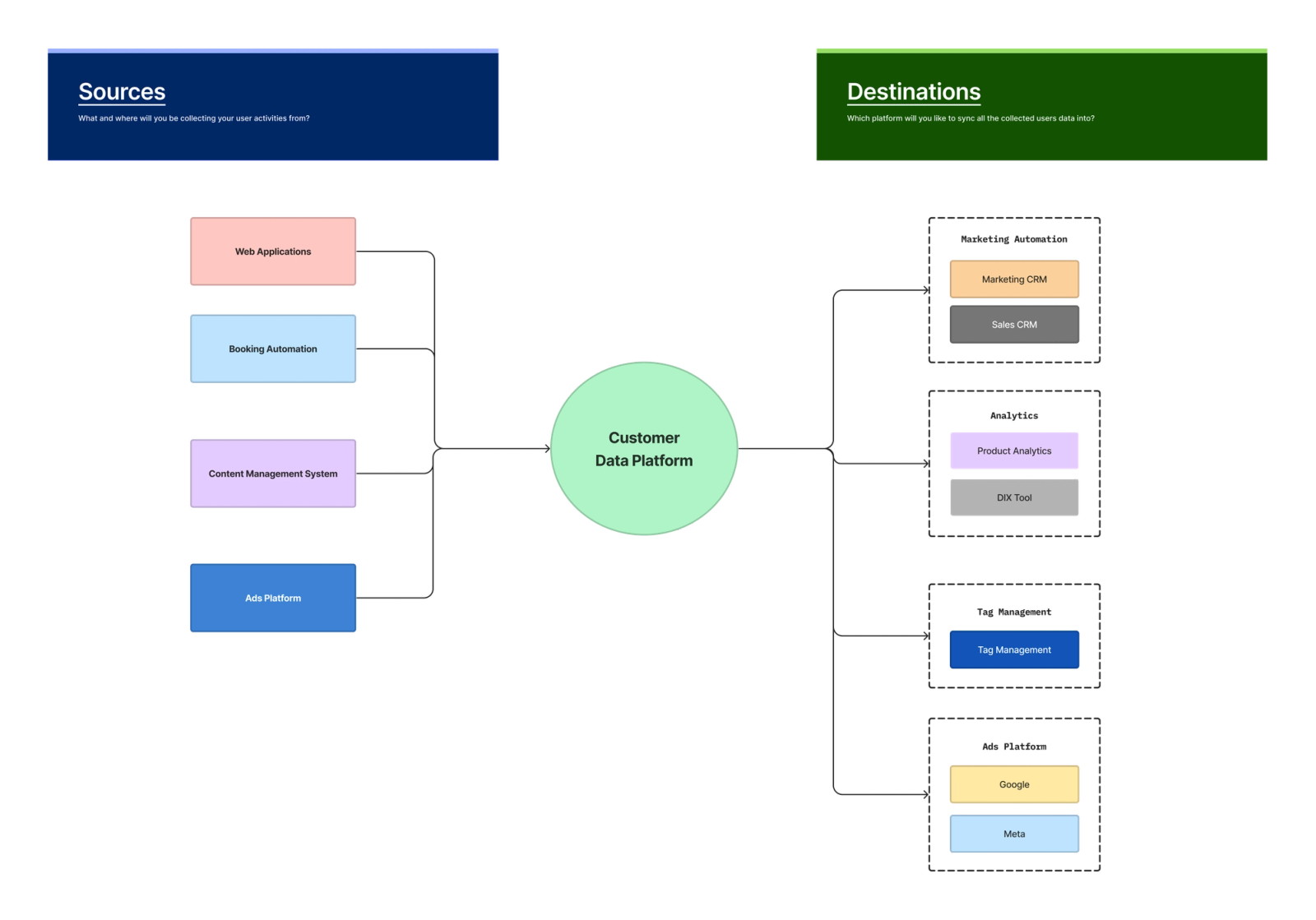
If you're not sure what type of information your company collects on customers, and where it lives, it may be time to consider implementing a CDP.
A customer data platform is a single source of truth for customer data. It can identify and target customers based on their interests, behaviours, location and more.
With an integrated CDP, you can consolidate customer data from multiple sources into one place so that you can quickly access the information you need to make decisions about your customers. This will help ensure that all of your marketing efforts are aligned with the right targets.
The role of customer data platforms (CDPs) is to collect lots of data about customers who do business with a company, create a detailed image of the customer, and deliver effective, personalised communication across all channels.
Simply because the more you know about your “perfect” customer, the easier it will be for you to implement lookalike modelling to find similar people you can target your marketing to.
In other words, the more information you have about them, the better your chances are at reaching out to similar individuals who are likely to respond favourably to your product or service.
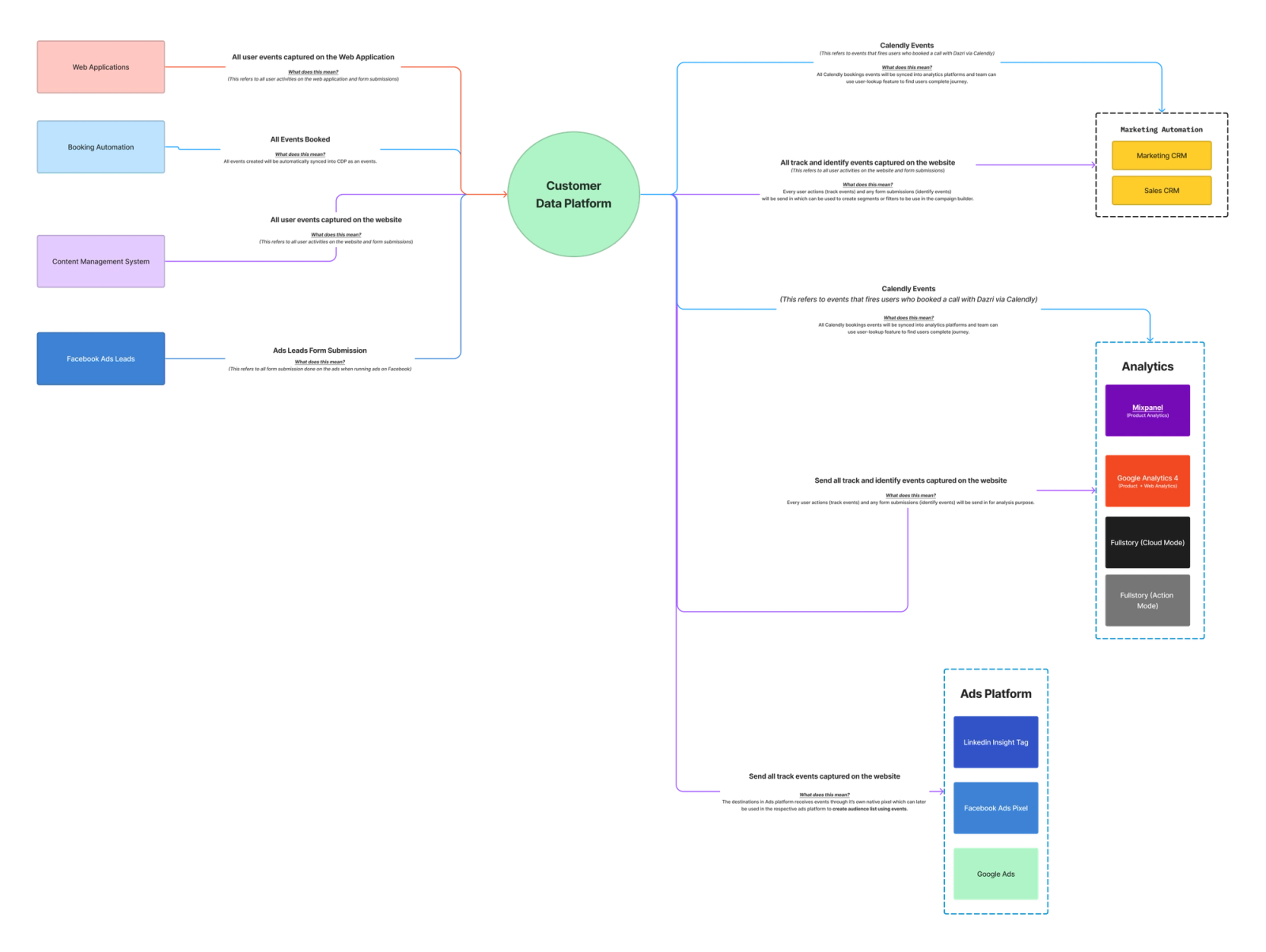
In the example above, the image illustrates how a team develops its 1st-party data strategy by incorporating a Customer Data Platform.
With a CDP in place, the team can easily connect multiple sources of data and streamline all customer data and key user actions that can be shared into other platforms for the team to use the data for a better and clearer product analysis or even build a better ads audience list.
Thus, a CDP becomes a single source of truth since all data are ingested into it first.

These days, it is possible to capture all the data about a customer’s journey from the moment they search for a product, to when they make a purchase. This means you can see what products they were looking for, what products they clicked on and ignored, and even which products they ultimately purchased.
You can also enrich this dataset with data from every touchpoint your business has with customers, from customer support and management systems to marketing platforms and invoice management products.
This rich dataset enables new use cases for enterprises beyond traditional reporting.
Some of the key benefits that you'll be able to achieve with a CDP in your system:
CDPs are built to help businesses drive their growth to a whole new level in today's highly competitive space but do you know which teams in the company will utilise it and make an impact on the company's performance?
Let's dive into it and discover some of the teams that will be fully utilising a CDP.

A CDP is designed for marketing. It collects and unifies first-party customer data from multiple sources to build a single, coherent, complete view of each customer and then makes that data available to marketers to create targeted and personalised marketing campaigns. CRM solutions are designed for sales.
A CDP is often the first step in a customer journey that starts with prospecting and leads to engagement, retention, advocacy, and loyalty. When companies think about their customers as individuals who want more than just products or services, they can create an experience that makes customers feel special.
Marketing teams need a CDP to be successful because it provides them with the right data at the right time so they can do their jobs well.
Here are some of the ways that marketers use CDPs:

Customer Data Platforms (CDPs) are a powerful tool for enabling data-driven feature development, but they can also be used to simplify data collection and analysis. Learn how CDPs fit into your engineering workflow and improve your product development process.
Here are some of the ways that engineering teams use CDPs:
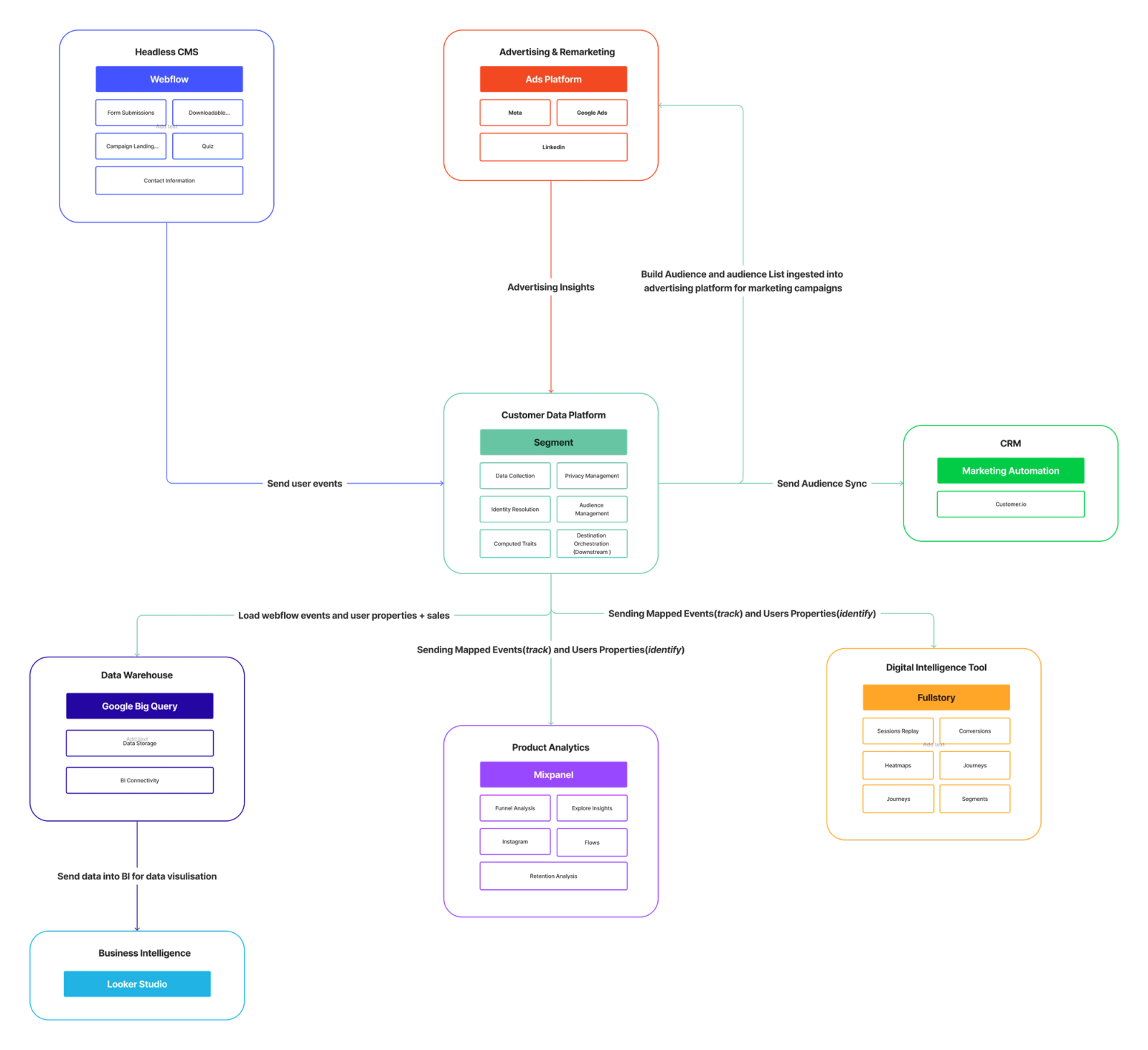
We've all been there: you're trying to create a perfect digital architecture and are finding it difficult to get a single source of truth for all the data collected across all channels and platforms.
With that in mind, here are some pain points of an architecture without a CDP.

We get it.
Learning and adopting new software tools can be overwhelming, and not everyone has the luxury of time to spend on learning it. But your business is growing, your team is getting bigger, and you need to hit those KPIs for the quarter!
You're right. You shouldn't have to spend time learning how to instrument a Customer Data Platform (CDP), or even come up with a bespoke 1st-party data strategy for your business. So why should you?
The fix starts with a diagnosis. A Blueprint turns the gaps in your customer data into a plan for your first-party data. A Build then puts that plan in place in phases, and your business owns the result.
It combines the best features of other analytics tools, with the ability to mine your CRM data for deeper insights into who those customers are and what they want. A CDP helps you use information across channels in near real time, with less manual work.

Every Blueprint ends with a costed plan: findings, a map of your stack and prioritised recommendations. Every Build runs in phases, and no phase starts before its gate clears. You know what you get before you commit to the next step.
Innovative solutions tailored to each of the customer's unique needs will be dedicated to helping your customers reach their goals.
Not sure where to start? A Sandbox is a one-week paid proof that scopes your customer-data setup on your own systems, and credits in full towards a Blueprint if you continue within 30 days.
Find the right engagement fit for your current need(s)
Go to Market
Consulting
Validate ideas with market research, strategic planning and prototyping. Ideal for exploring new concepts.
Martech
Implementation
Launch Low-code MVP or Custom Interactive websites with user-focused design. Perfect for quick market entry.
Growth & Marketing
Campaign Experimentation
Boost growth with scalable systems and marketing automation. Suited for advanced analytics and more.
For teams with a bigger appetite for growth
Martech
Transformation
Transform with system modernization and integration. Best for comprehensive digital change.
Martech
Growth Operations
Optimize performance and reduce technical debt. Ideal for efficiency and fine-tuning.

Enterprise Singapore sets the rules and can change them. In general, you need all three of these before your project is assessed.

The grant is run by Enterprise Singapore for companies registered and operating here.

You need to have sufficient funds available to pay for the entire project upfront.

You need a defined project with real deliverables, dates, and outcomes.














We can't wait to hear all about your game-changing ideas. Spill the tea!

Be the first to know on further updates on Growth contents for your organisation, don't miss out on our sneak peaks and exclusive community contents!