

Martech
Growth Operations
Expand
Optimize performance and reduce technical debt. Ideal for efficiency and fine-tuning.


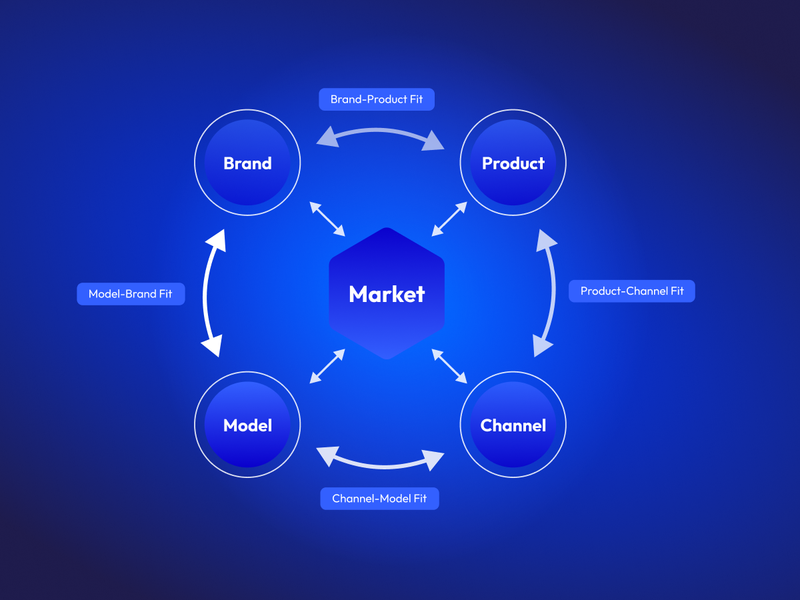
Developing a tailored go-to-market plan is key for Singapore B2B SaaS firms launching new products successfully into the market.
For Singapore small and medium enterprises (SMEs) introducing business-focused software solutions, having a strategic go-to-market (GTM) roadmap tailored to local market nuances can make all the difference in cutting through noise to achieve product-market fit.
This comprehensive guide will explore the key components that Singapore-based B2B SaaS providers need to craft targeted GTM blueprints to win customers ahead of regional and global rivals.
📑 Before moving on, we recommend you to bookmark this page, you never know when you need to revisit it again!
For Singapore B2B SaaS companies with bold ambitions of securing funding, finding product-market fit and ultimately dominating their niche, this guide distils advice from experienced practitioners.
Within these actionable pages, you’ll discover:
Equipped with insights from the biggest minds in B2B building, this definitive guide serves as your blueprint to transform from promising upstart to a globally revered organisation. Hats off to you for taking the first step towards your epic journey!
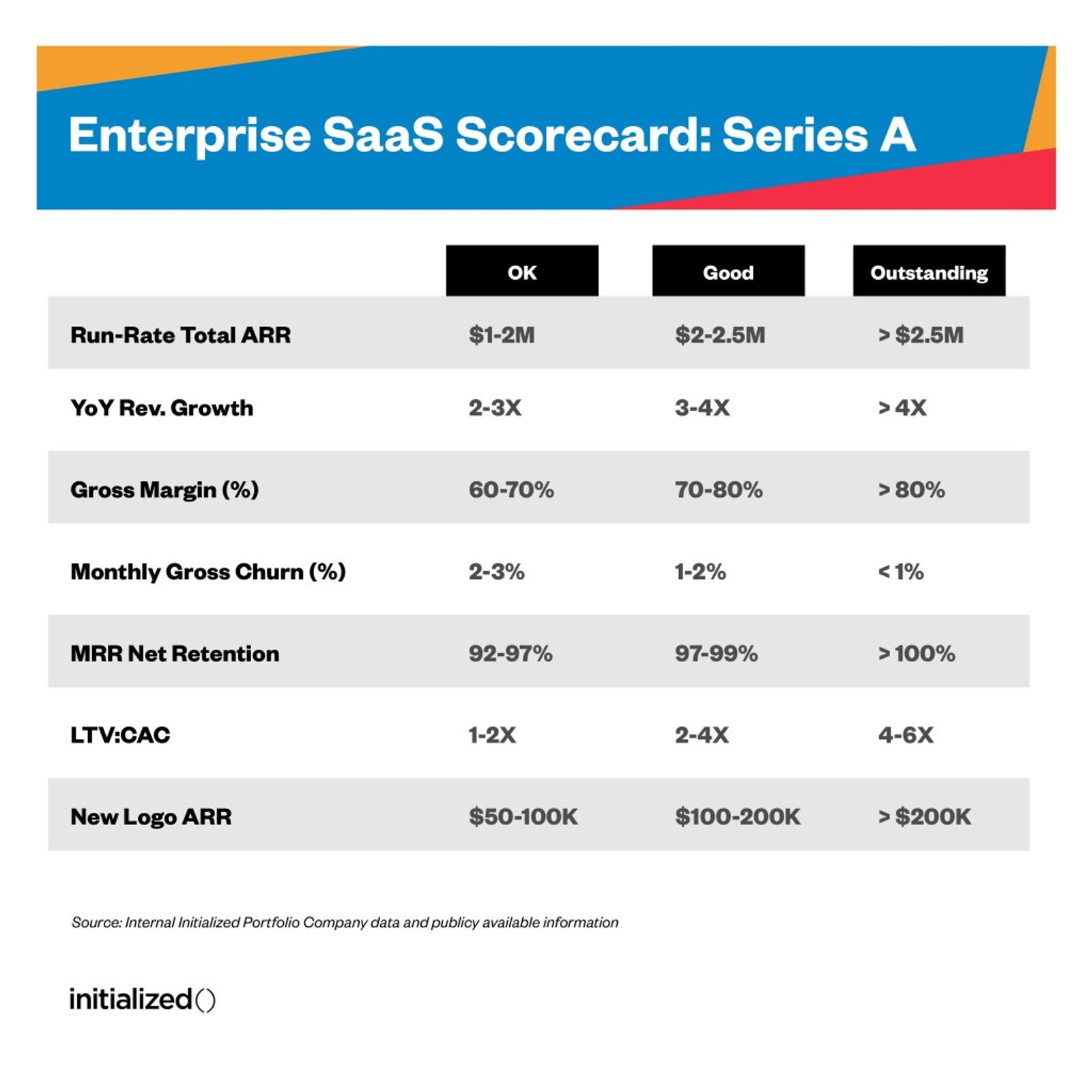
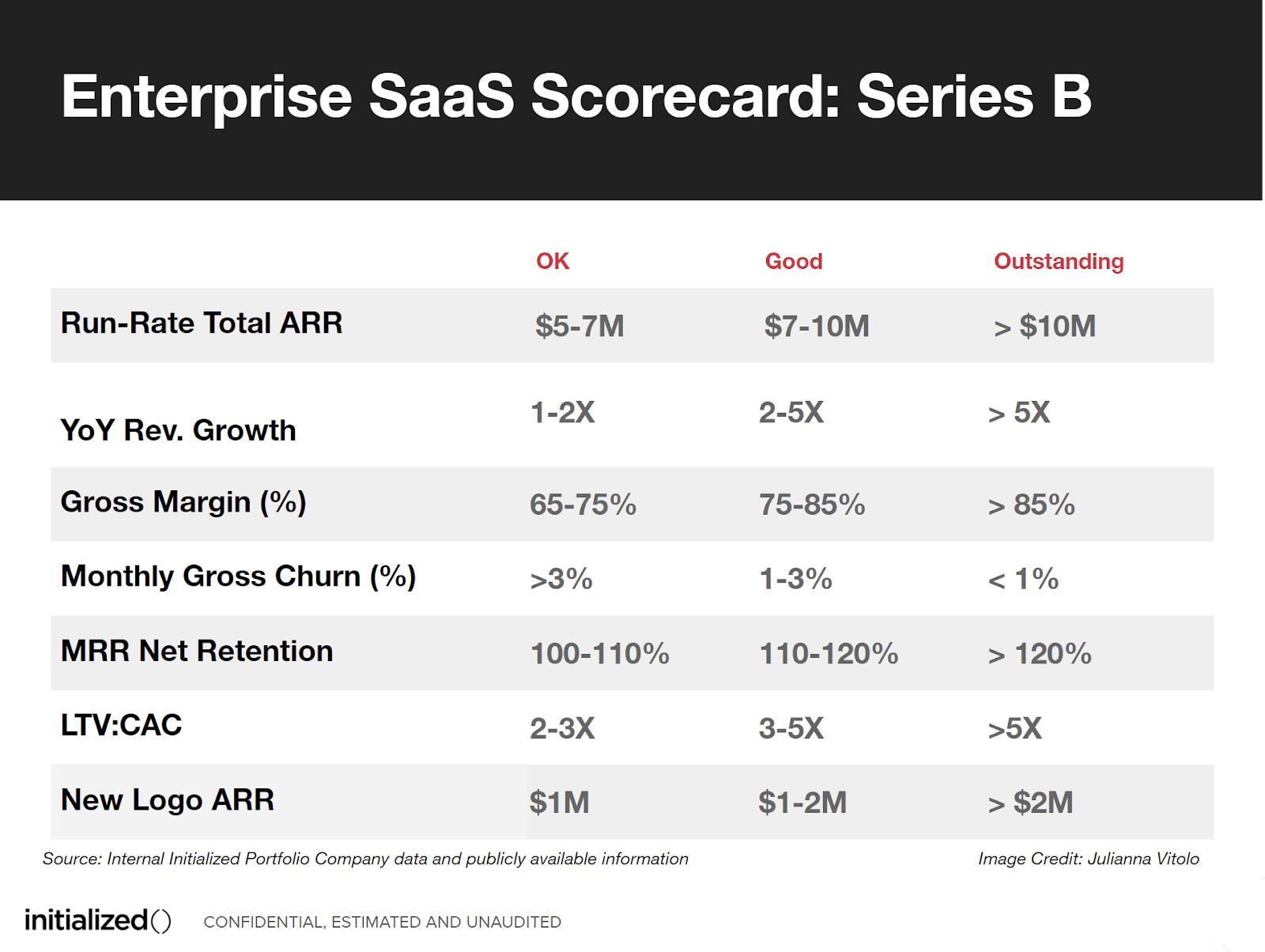
We've provided other guides to help you digest the metrics so you'll be able to quickly validate what "Product-Market-fit" means to you eventually
Total annual recurring revenue based on current month's contracted business
Example: If monthly recurring revenue (MRR) in Jan is $100K, run-rate ARR = $100K * 12 = $1.2M
Percentage increase in total revenue compared to previous year
Example: 2025 revenue of $2M vs 2024 revenue of $1M = 100% revenue growth
Total revenue minus cost of goods sold, divided by total revenue
Example: $1M revenue - $200K COGS = $800K gross profit ÷ $1M revenue = 80% gross margin
Percentage of recurring revenue lost in a month due to cancellations or downgrading
Example: Jan MRR is $100K. Feb MRR is $90K after $10K churn. Churn = $10K/$100K = 10%
Total increase in recurring revenue from existing customers over time period
Example: 120% net retention means existing customer MRR increased by 20% in 1 year
Lifetime value of a customer divided by cost of acquiring each customer
Example: 3x ratio means a customer's lifetime value is $3k and CAC is $1k
Total annual recurring revenue from new customers in given time period
Example: Added 50 new customers in Jan at $2k ARR each = $100k new logo ARR
Total monthly recurring revenue at a given point
Example: MRR of $100K means recurring subscription revenue for Jan totals $100K
Percentage increase in key metric like revenue over defined time period
Example: Grew revenue from $1.2M to $2M in 2024 for 67% YoY growth
Percentage of recurring revenue lost due to cancellations or downgrades in time period
Example: Lost $10K MRR out of $100K totals 10% monthly churn
Number of months to recover CAC through a customer's lifetime revenue contribution
Example: 15 month payback period means it takes 15 months of subscriptions to recover cost of acquiring each customer
Hope you found this not too dry and insightful 🥰
Now, at this point we're fast forwarding the whole value-delivery of this article. We're assuming that you've already gotten your business model sorted out at this point. If you have not, we'll drop by some tips towards the end of this article, so be sure to continue reading on!
For B2B SaaS firms launching across Southeast Asia, calculating total addressable market (TAM) requires nuanced approaches accounting for immense diversity.
With multiple languages, regulatory environments and buyer preferences, founders need tailored data-driven strategies per country powered by data enrichment platforms.
Let's examine effective frameworks to quantify accurate TAMs despite fragmentation.
Blanket regional analyses inevitably overlook crucial local differences in B2B software buying factors, obscuring TAM clarity.
Prudent founders obsessively segment potential markets using dimensions like:
Firmographics
Technographics
Cultural Nuances
This precise targeting allows founders to quantify served available market (SAM) and serviceable obtainable market (SOM) in launching beachhead countries before expanding.
With narrow ICPs carved out, B2B software TAMs in Asia can be accurately sized using first-principles bottoms-up math:
Country 1 Beachhead
ICP Firms (SAM): 28KAdoption % (SOM): 2% Year 1 -> 10% Year 5ACV per account: $5K/$15K/$45K for SMB/MM/Enterprise
= $28M TAM
Repeating for key countries provides clarity on regional potential where top-down data lacks local precision.
Of course, markets evolve so founders obsessed with excellence continually track metrics shaping strategy including:
By combining rigorous TAM modeling with vigilance over market dynamics, B2B firms can scale intelligently country-by-country amidst Asia complexity.
If you're unsure how to size your market, start with a bottom-up count of the accounts that fit your ideal customer profile.
Use the grid if you're hyper-focused in South East Asia, especially Singapore.
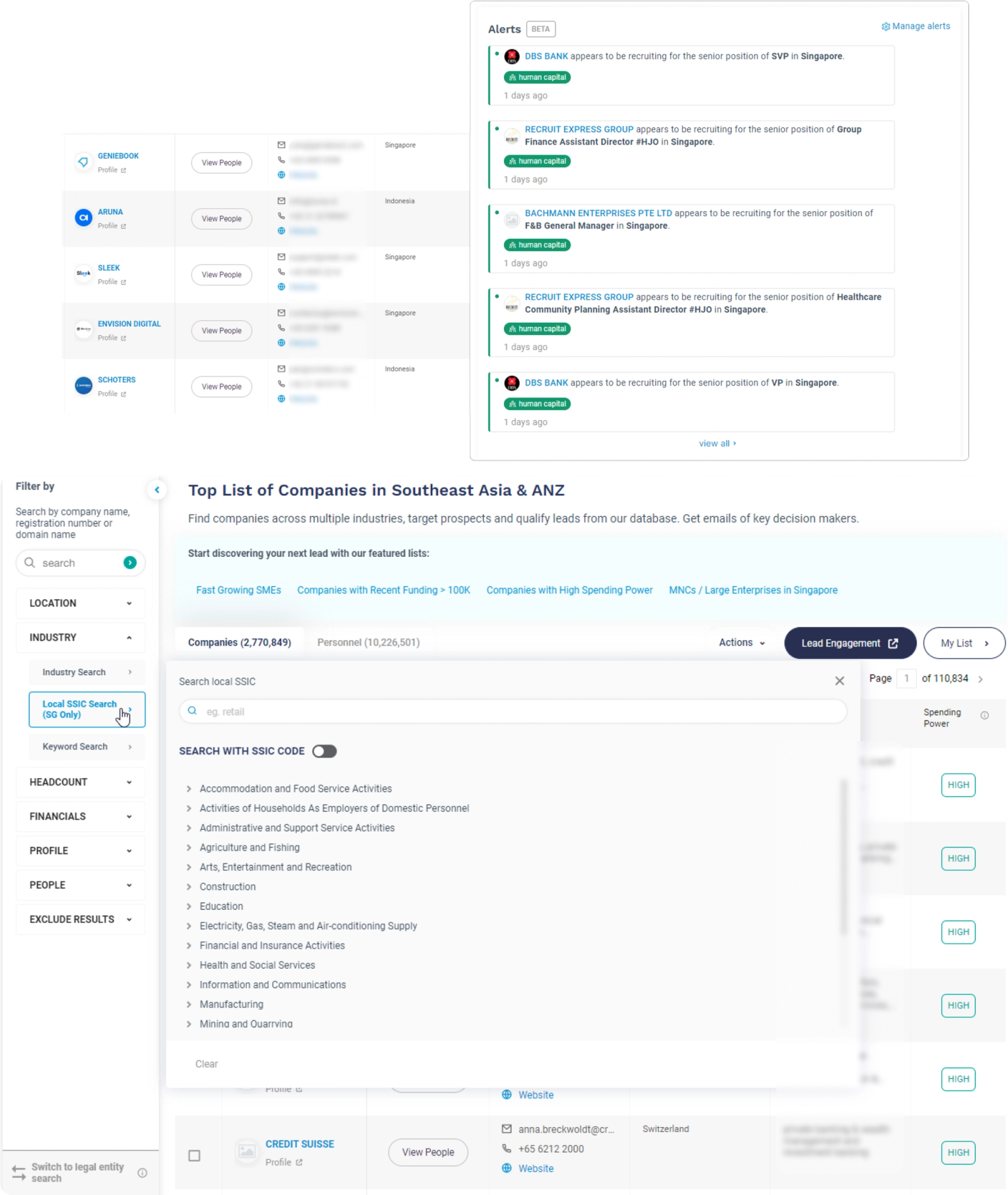
Think of it as the "Zoominfo", or "Apollo.io" of Southeast Asia. Just as a heads-up: this snapshot is a preview of their enterprise plan.
Here's what you need to build a $100M / year business; to better understand this, watch Brian Balfour's content on ARPU-CAC spectrum here
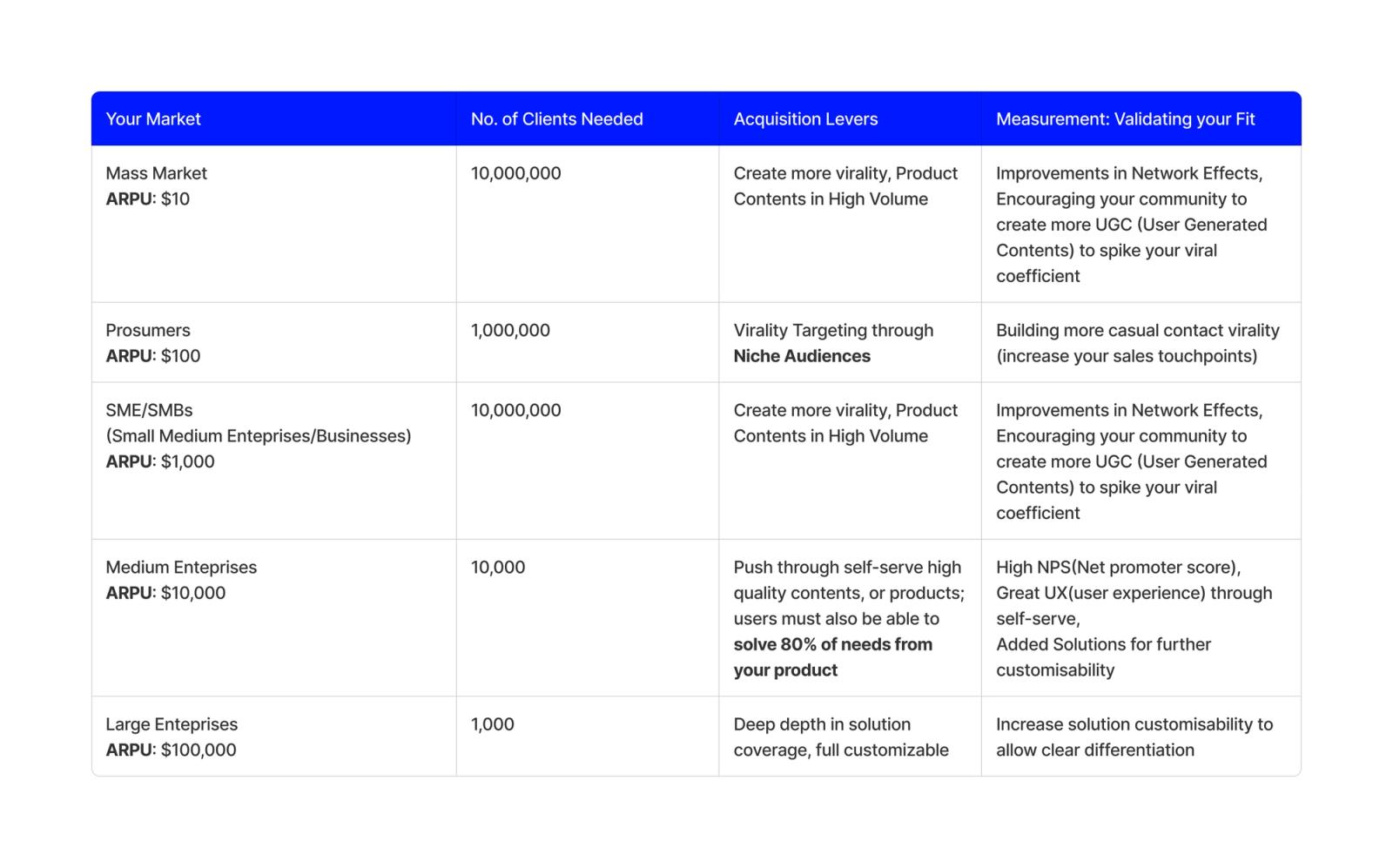
That sums up a quick run-down on your Market Sizing.
Next in line, we'll map out the tools and tech stack you need for an effective sales process optimised to convert and expand leading B2B accounts in Singapore and your global audience in the coming years.
Note that we've created this guide especially for those concerned about "Expensive tools".
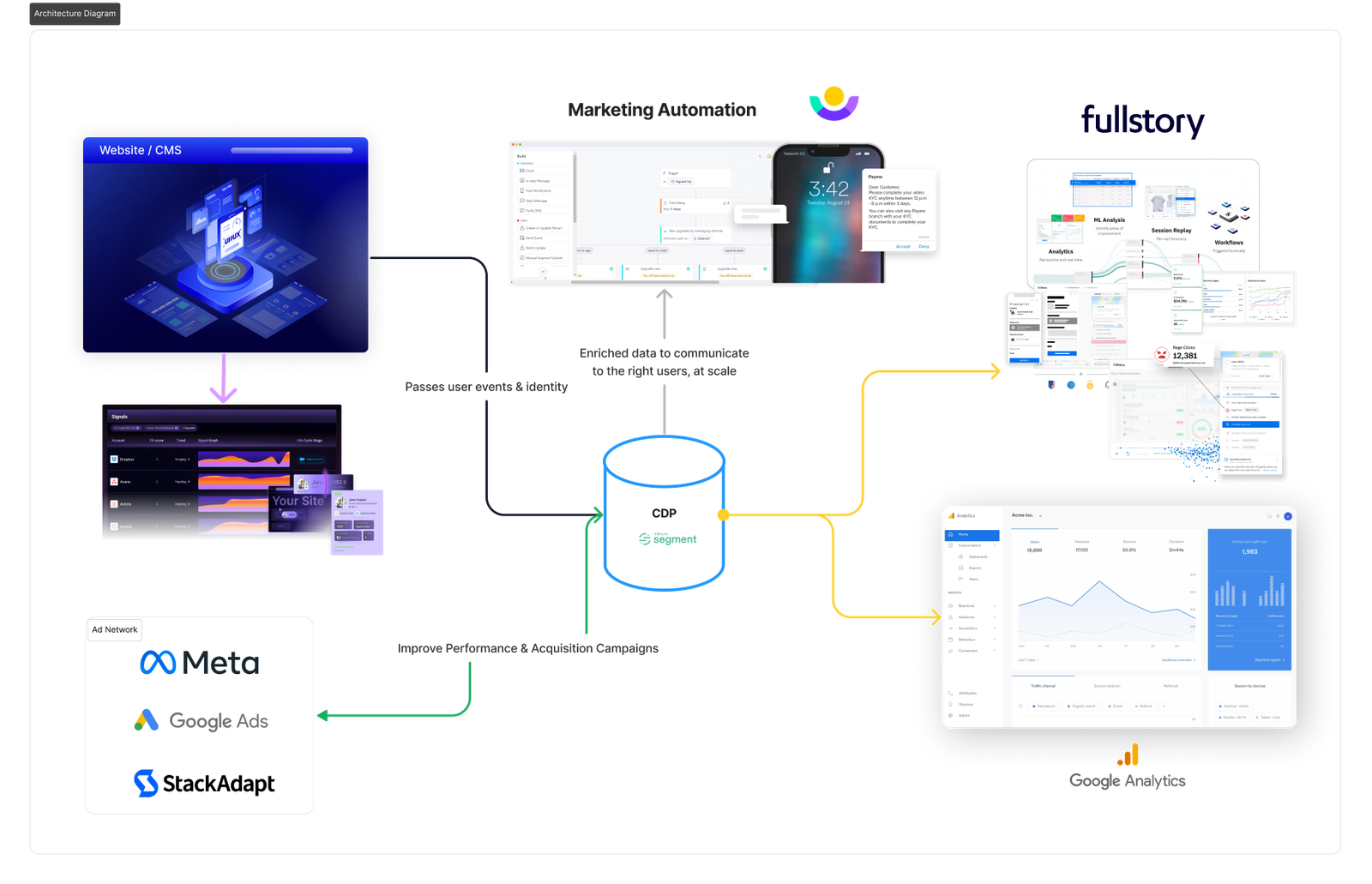
Here's a snapshot of the architecture diagram and links for you to get through startup programmes, free tools and free credits in your initial years!
For founders of high-growth Singapore software startups, the go-to-market (GTM) strategy profoundly impacts everything from product design to team structure.
Navigating the nuances between bottoms-up, middle-out and top-down models allows smarter resource allocation driving efficiency in the race to product-market fit.
Here's a quick evaluation run-down based on our thoughts ( best re-read once you've digested Unusual VC's Go to Market Motion contents below )
The bottoms-up GTM motion prioritises rapid user acquisition over deal size. By offering freemium access or trial periods, products "sell themselves" enabling frictionless adoption.
Conversely, the top-down approach focuses sales efforts on securing large enterprise deals first. However, this could sacrifice critical user feedback and product-market validation early on.
Assessing the trade-offs allow founders to determine best-fit.
The middle-out framework strikes a balance, combining self-serve adoption by department heads with enterprise-level pricing.
This allows both wide access and premium monetisation simultaneously. However, product and positioning needs to resonate across user tiers.
For Singapore B2B startups, middle-out warrants close consideration.
As we've explored, GTM models offer distinct trade-offs between deal velocity, deal size and feedback loops.
Local founders must also account for Asian norms including relationship-based sales, tight budgets even among large firms, and preference for regional references.
While no panacea exists, contextualising global best practices for Asia unlocks big upside.
Here's the TLDR of what the playbook consists of:
Structuring your Sales Playbook with..
(If you're using AI to facilitate and co-strategise with you on this, we strongly recommend using claude)
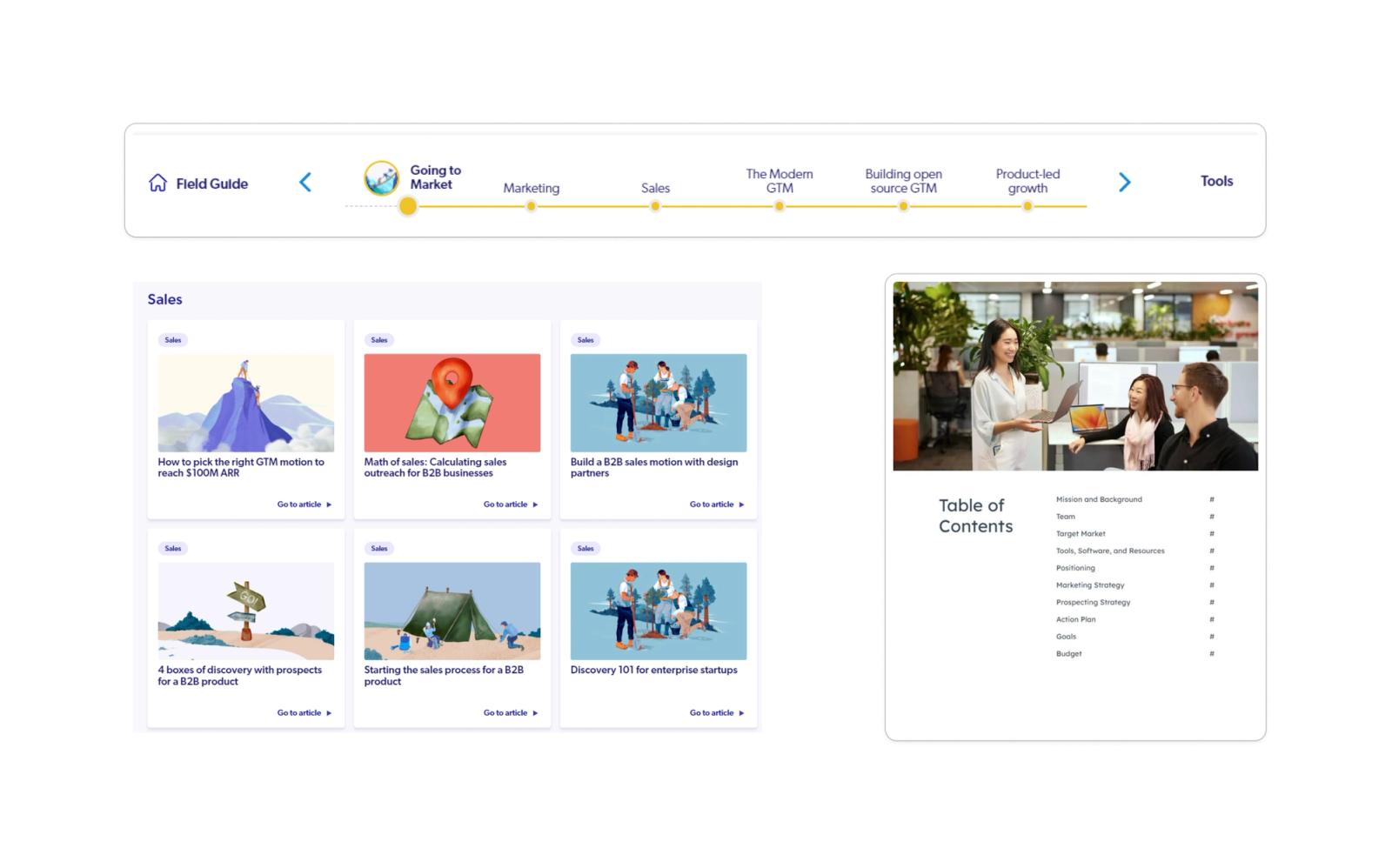
Explore Unusual VC's Go to Market Content Series if you'd like to dive deeper.
Download HubSpot's free Sales Playbook template for Asia.
Causal, now part of Lucanet, built tools to help founders forecast without hiring a CFO early on. Taimur Abdaal of Causal covers this in "Forecasting B2B SaaS Revenue".
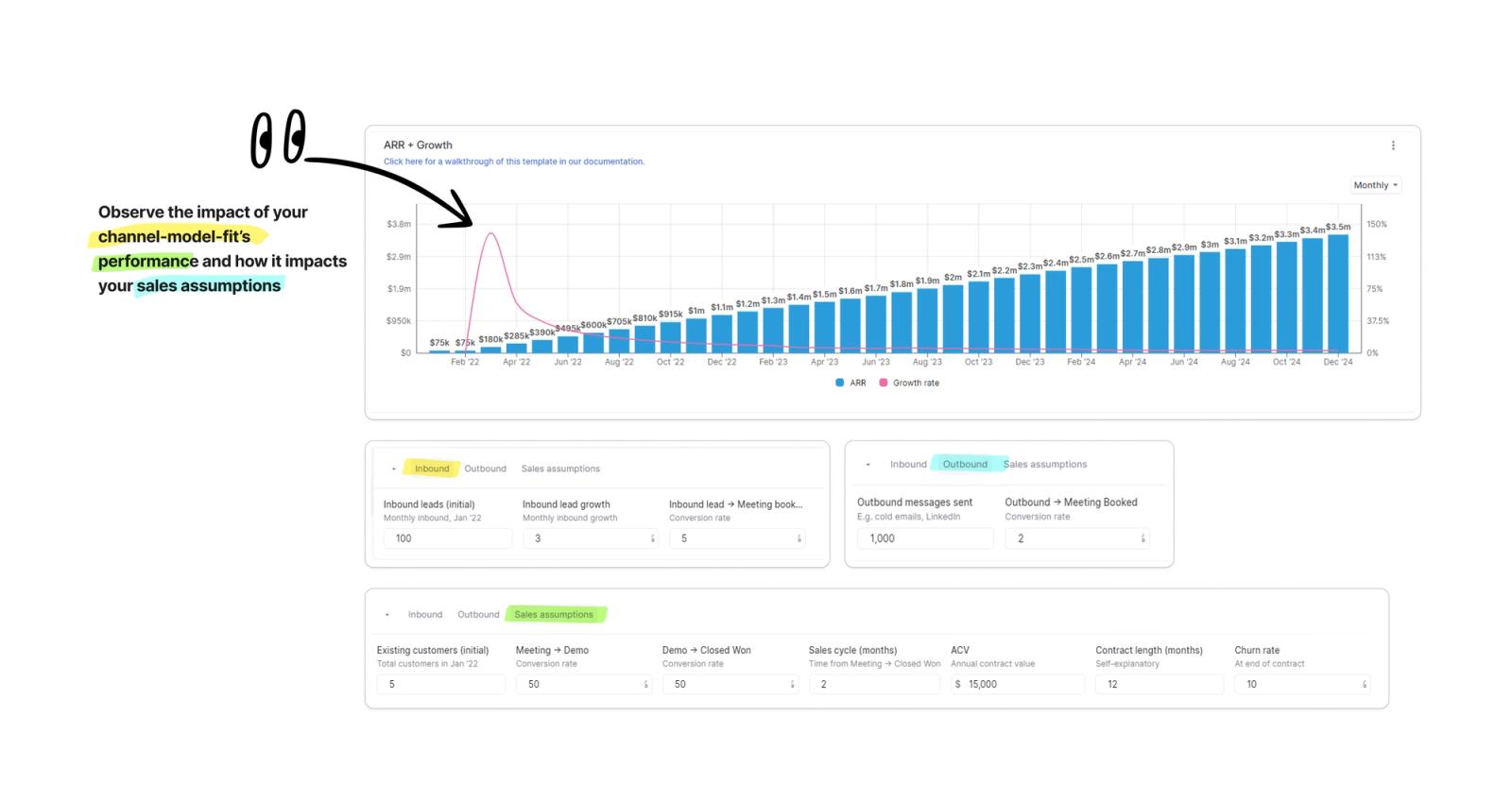
With that, we're assuming that we've provided points around strategic go-to-market plans, from product-market fit to partnerships. Prudent founders also need data-backed mechanisms to model potential growth paths.
Here's some further context on why a revenue model helps you validate your forecast
A B2B SaaS revenue model lets founders quantify expected expansion by tuning key assumptions like:
Allowing easy simulation of variables that profoundly impact top and bottom-line metrics over 3-5 year horizons.
For example, by factoring nuances of the Singapore enterprise sales landscape, founders can simulate trade-offs balancing channel partnerships with direct sales to double team growth.
Likewise, anticipating early retention challenges due to fragmentation allows baking in mitigation plans ahead rather than reacting post-facto.
By codifying assumptions into clear projections, founders maintain alignment on priorities fueling efficient execution even amidst uncertainty.
With credible growth modeling hardwiring realism into the blueprint, B2B startups equip themselves to systematically turn lofty ambitions intro reality.
With thousands of words on architecting B2B success now consumed, we appreciate you sticking through this long yet imperative journey.
As we bring this playbook to a close, one final recommendation merits mention if you seek hands-on help in bringing ideas to life:
Collaborating for Rapid Validation and Launch
If your Singapore B2B startup already has well-defined go-to-market plans and momentum, collaborating directly with growth specialists like Admiral Systems can expedite product-market validation, technology building and secured first sales.
Our methodology blends strategy, development and commercialisation to unblock obstacles at all stages and accelerate time-to-value.
Start with a Blueprint, a paid diagnosis that ends with a costed plan.
Hope you loved the article! Don't forget to bookmark this page, you never know when you need to revisit it again!
Find the right engagement fit for your current need(s)
Go to Market
Consulting
Validate ideas with market research, strategic planning and prototyping. Ideal for exploring new concepts.
Martech
Implementation
Launch Low-code MVP or Custom Interactive websites with user-focused design. Perfect for quick market entry.
Growth & Marketing
Campaign Experimentation
Boost growth with scalable systems and marketing automation. Suited for advanced analytics and more.
For teams with a bigger appetite for growth
Martech
Transformation
Transform with system modernization and integration. Best for comprehensive digital change.
Martech
Growth Operations
Optimize performance and reduce technical debt. Ideal for efficiency and fine-tuning.

Enterprise Singapore sets the rules and can change them. In general, you need all three of these before your project is assessed.

The grant is run by Enterprise Singapore for companies registered and operating here.

You need to have sufficient funds available to pay for the entire project upfront.

You need a defined project with real deliverables, dates, and outcomes.














We can't wait to hear all about your game-changing ideas. Spill the tea!

Be the first to know on further updates on Growth contents for your organisation, don't miss out on our sneak peaks and exclusive community contents!