


Martech
Growth Operations
Expand
Optimize performance and reduce technical debt. Ideal for efficiency and fine-tuning.


A successful new product launch can mean the difference between success and failure for companies. However, many product launches fail miserably. A Gartner consulting study revealed that over 80% of all projects that involve a new product fail at their launch stage. Only 16% of companies have a successful first introduction of new products in the marketplace.
Connecting with the ideal audience remains an evergreen challenge for businesses irrespective of introducing new products or services or making advancement or refinements in existing product market approaches consistently. But, you surely can save your time and resources by creating hyper personalised B2B go to market strategy and can sidestep the pursuit of irrelevant prospects.
But before we dive deeper, let's quickly establish a solid foundation and alignment of B2B business & marketing.
In simple terms, a B2B market entry strategy is your organisation's meticulously crafted roadmap for uncovering untapped market opportunities, ultimately securing both new and sustained business ventures.
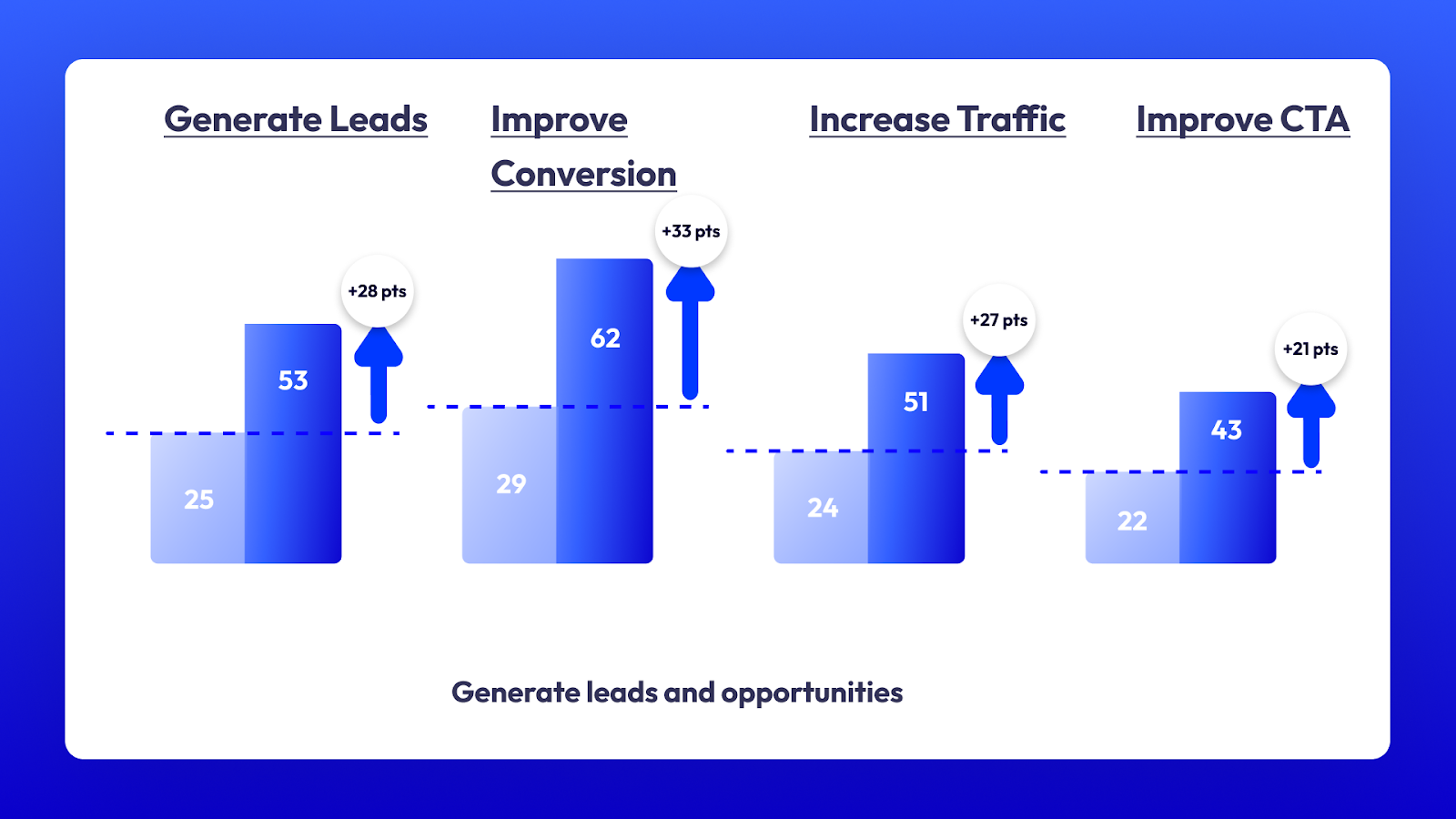
If you are a B2B or SaaS company, you can clearly understand that today there are more options for marketing than ever before. You may be wondering what your go-to-market strategy should be. How do you know if you need a marketer? What does a typical Go To Market (GTM) plan look like for B2B and SaaS? It encompasses comprehensive exploration of initiatives and offering like:
Once you’ve identified the pain points of your customer base and determined how your product solves those problems, you have reached the point where you can start creating go to market strategies.
The most important component that drives success of a B2B product, but it is rarely well defined or exists at all during the early stages of product development. The lack of B2B go-to-market strategy at this stage stems from several reasons, such as lack of real market validation, limited resources, and shifting priorities etc.
Below you will find some quick elements that are essential and you can not give it a miss.
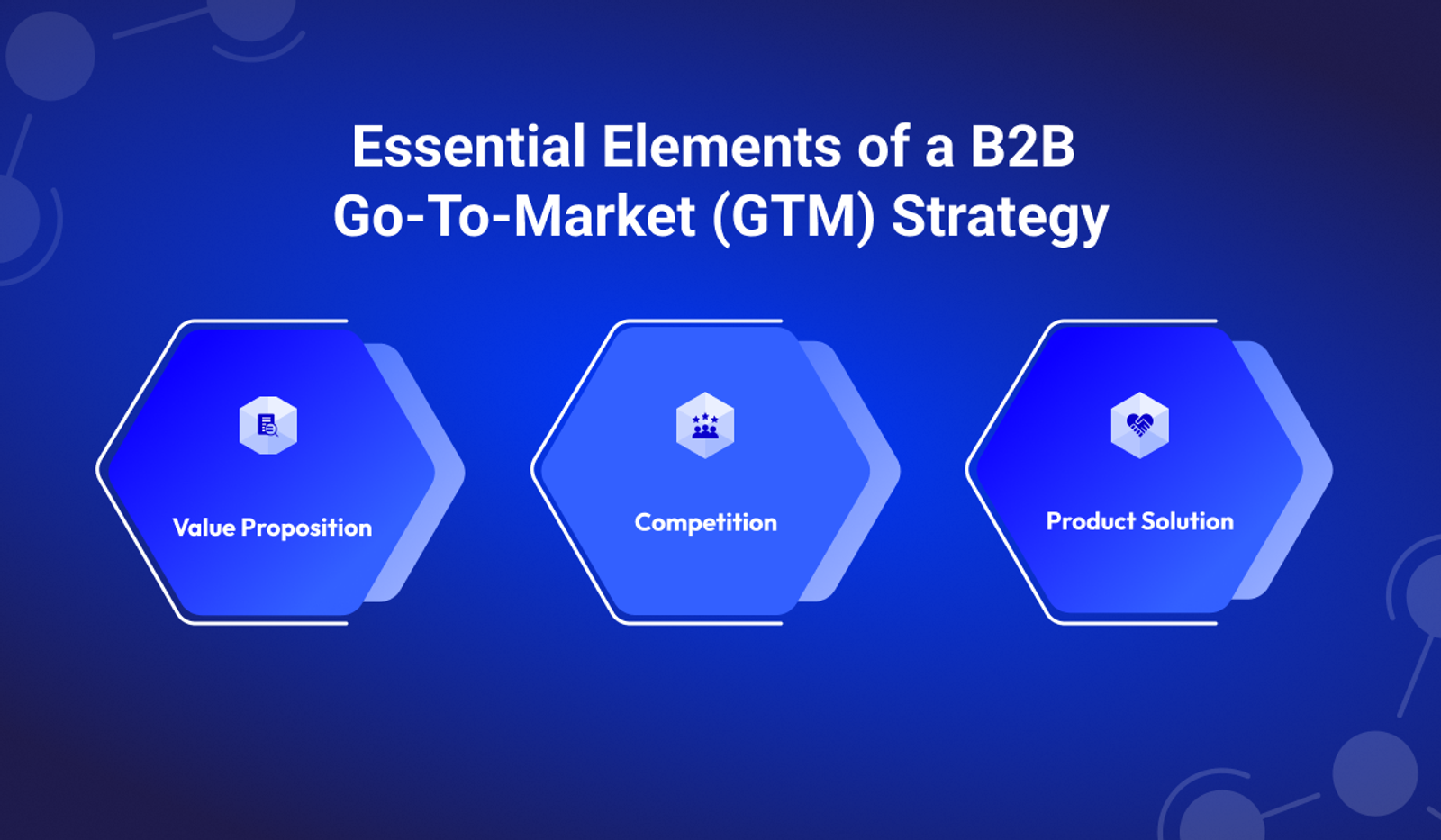
The first step in developing your go to market strategy is to explore and establish your competitive differentiators. This can be defined as being a clear, simple and compelling statement used to differentiate yourself from your competitors. It should explain what value you offer to potential customers.
It should be clear, concise and memorable, so it can be easily communicated to customers. It should also reflect the real value of what you're offering and be differentiated from your competitors' offerings.
To determine your UVP, think about how your product or service solves a problem for customers, what problem it solves and why they should buy it from you rather than someone else. You will likely have multiple UVPs for different segments of customers or different target markets.
The following steps will help you determine your UVP:
1. Identify Your Target Customer Segment
2. Conduct an Analysis of Competitive Offers
3. Understand Your Unique Strengths and Weaknesses
4. Identify Your Unique Value Proposition (UVP)
5. Test and Refine Your Proposition
Every business has one thing in common: the customer. Every business owner knows that it is necessary to know your market inside out. What better way to get an edge on your competition than by utilising their battle strategies?
Once you have identified your product, or service idea, you will need to conduct some research to understand the market and its competitors. A great place to start is by looking at your competitors' product offerings, pricing and marketing activities.
Include these steps to study competition:
When developing a go-to-market strategy for a B2B (business-to-business) or SaaS (software as a service) product, it's important that you present your product as a solution.
This means that you're helping your customers solve a problem. The problem could be something as simple as how to communicate with their customers more effectively or how to improve efficiency in their business processes. Or it could be something more complex, like transforming their entire business model by introducing new technology or changing the way they do business.
The point is that you want to show the reader that you understand their problems and that your product will help them overcome them.
Lets take a look at the four steps to present your product as soultion:
Now that you have a grasp of the requirements, let's move a step forward.
An effective B2B market entry strategy thrives on efficiency. By implementing the steps below, you can fashion a practical and potent blueprint that optimises your resource utilisation.
Go to market strategy begins with identifying the most relevant market for your product or service. In general you can address this customer revenue opportunities like TAM (Total Addressable Market), SAM (Service Addressable Market) and SOM (Service Obtainable Market). Narrowing down your target audience to specific target accounts and buyer personas is a pivotal step in shaping a triumphant B2B market entry strategy.
These are the essential parameter to identify during this process:
Once you keep these attributes, you can generate a list of targeted accounts and prioritise them. Once you are done with this process you can start creating ICP (Ideal Customer Profile) or buyers persona. This will help you to craft your personalised marketing messaging based on their behaviour, interest etc.
Once you've pinpointed your target audience and honed in on your Ideal Customer Profile (ICP), the next step is crafting messaging that revolves around your product solution and resonates with your buyer personas' interests. This phase requires some dedicated effort to uncover your customers' genuine pain points, highlighting the value proposition you provide compared to your competitors.
Here are the five steps we recommend taking to craft customised messaging:
1. Identify your target audience: Once you've identified who might be interested in purchasing your product, then you can start crafting customised messaging for each group. This will help you attract more targeted traffic and increase conversions on your landing pages.
2. Create buyer personas that reflect their values and frustrations: Buyer personas help you understand what drives your customers, what challenges they face and how they prefer to engage with your brand. This helps you create messaging that resonates with them, and ultimately drive more sales.
3. Craft messaging that speaks directly to their needs and interests: It is important that you speak directly to your target audience's needs and interests. Doing so will help them identify with your product and feel like they're part of an exclusive club.
4. Determine the key messages you'll convey for each buyer persona: Take time to understand who your buyers are, what they care about and what motivates them. Craft a handful of key messages that will resonate with each persona and make it clear why they should buy from you instead of from competitors.
5. Tailor individual messaging for each of your buyer personas: Buyer personas are the backbone of your marketing strategy. They represent your ideal customers and teach you about their preferences, challenges and pain points. Use them to guide everything from your website design, to the content you share on social media and in blog posts.
It's all about shaping your messaging to address these specific pain points and showcasing how your solutions can drive positive outcomes for your customers' businesses.
There are many metrics for success. There are three types of KPIs you can track as part of the B2B go to market strategy.
1. B2B lead generation and conversion metrics - Understand how many leads convert into opportunities at each stage and how much revenue they drive. To measure this, you can use a funnel tool like Hubspot’s CRM or Salesforce’s Pardot to track each stage in the sales process.
2. B2B customer retention and satisfaction metrics - Retention is an important metric when it comes to measuring success in the B2B. You should be tracking retention over time to see how often customers buy again and how much more they spend with you over time compared to other companies in your industry.
3. SaaS product KPIs -It’s important to track KPIs for your product as well, since SaaS businesses make money by charging their customers a recurring fee every month or year for using their software.
Here are some of the most essential elements of setting KPIs:
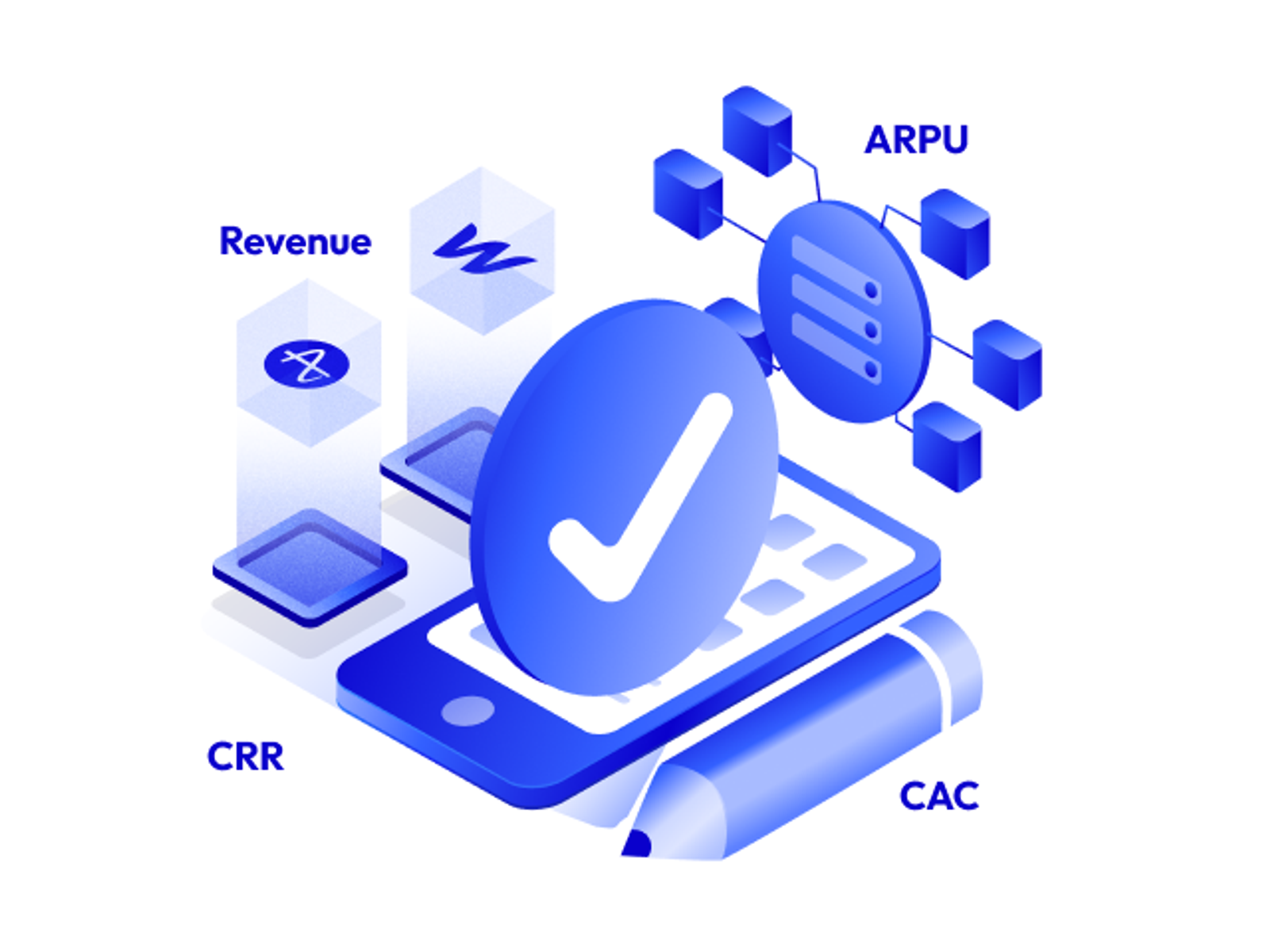
The customer journey serves as a valuable roadmap for pinpointing pain points customers encounter throughout their buying process. This insight enables you to refine your messaging strategy with greater precision. Several critical stages to monitor include:
Pricing is one of the most important decisions in building a successful B2B SaaS business. It directly impacts your customer acquisition and retention strategies, as well as your overall revenue through different growth strategy services.
There are many ways to set prices for your SaaS product or service. The most common pricing models include:
With your strategy in place, it's time to select the optimal channels that align with your product or service model.
B2B go to market strategy is a complex thing. It requires a lot of thought, planning and execution.
A successful B2B go to market strategy requires an understanding of the customer needs and wants, their business challenges and how your product can help solve those problems. Achieving the
It also requires an understanding of how your company will serve them better than others do.
Here are some quick recap to develop a successful B2B go to market strategy:
With all these tasks successfully accomplished, you'll gain the capability to predict and anticipate the results of your diligent efforts. This forecasting ability empowers your team to make informed decisions and adjustments, ultimately enhancing the efficiency and effectiveness of your strategies.
If you're new to the concept of growth we'd strongly advise to work closely with subject matter experts, and explore Growth services to help you through this journey.
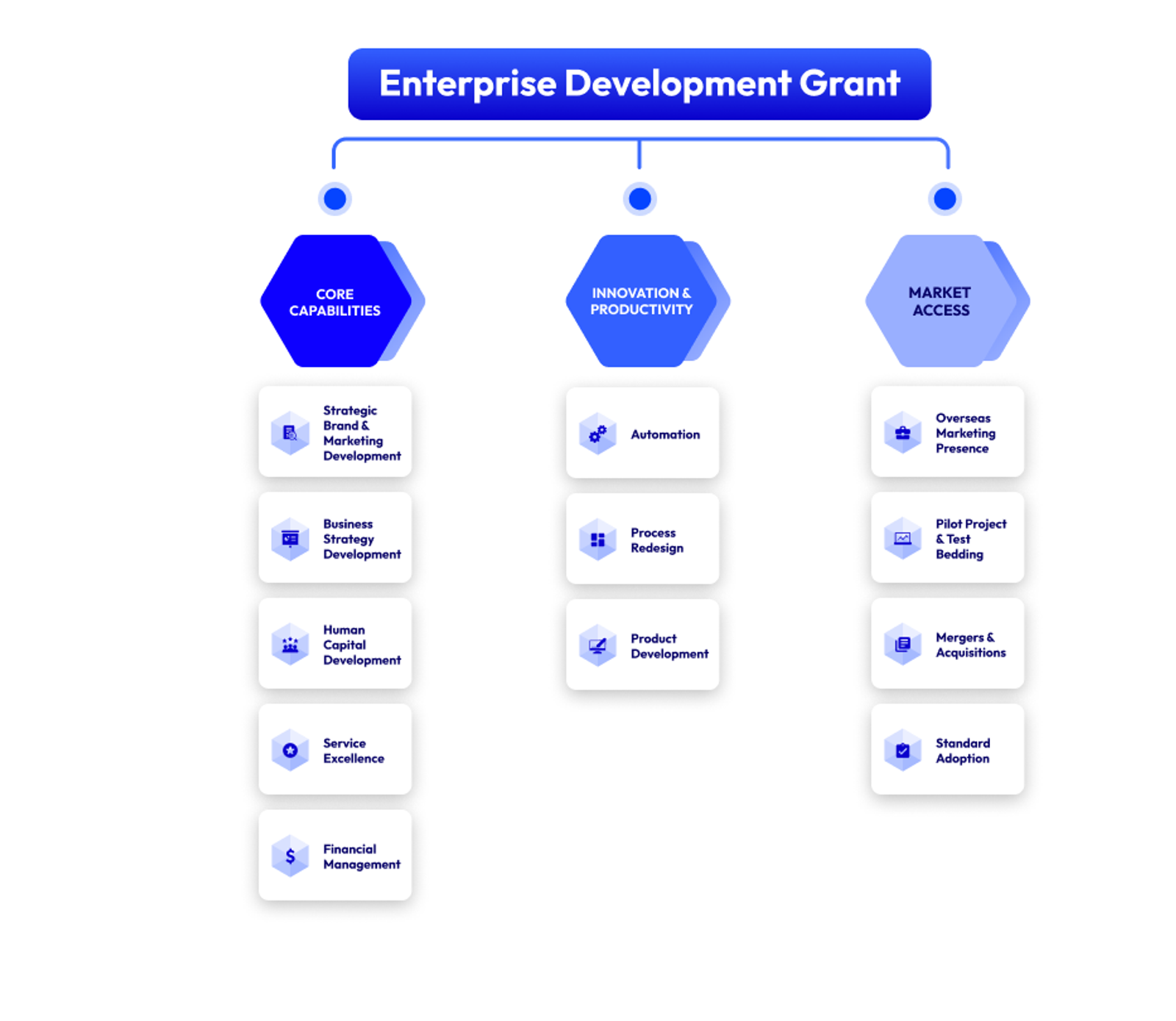
Here are some of the top grants that could help get your Project subsidised by up to 50% ( for certain industries ). To help you understand better, Dom - VP of Advanced Services, has taken the time to explain. Watch the overview video below:
The Market Readiness Assistance (MRA) Grant is a program offered by Enterprise Singapore, aimed at helping small and medium-sized enterprises (SMEs) based in Singapore expand into overseas markets. The grant provides funding support of up to 50% of eligible costs for activities such as market assessment, market entry, and overseas promotion.
This initiative also offers SMEs access to a range of in-market services such as business matching, market intelligence, and networking opportunities. The MRA grant is designed to help Singaporean businesses become more competitive in the global market and to encourage them to explore new opportunities beyond their domestic borders.
If you're an SME looking for strategic services, Go-to-marketing services or to expand your business internationally, the MRA grant along with other relevant ones to your business could be an excellent opportunity for you to take advantage of.
B2B companies need to be careful with their go to market strategy because there are many different types of buyers within the same company, and they all have different needs. For example, a sales representative may want something very different from an HR manager or executive leadership team member. For these reasons, it's important for b2b companies to create multiple ways for customers and prospects to interact with them before making any purchase decisions.
The same is true for SaaS businesses--they need multiple channels through which customers can engage with products/services at different points in their buyer journey (e.g., awareness stage vs consideration stage).
It's important to remember that your go to market strategy is unique and should be tailored to fit your business needs. There are many factors involved in choosing the right approach, including what type of product or service you're selling and who your target audience is. You should also consider how much time and money it will take before you start seeing results from any given sales strategy.
If you're keen to explore the grants further, book a call with our lovely team today!
Find the right engagement fit for your current need(s)
Go to Market
Consulting
Validate ideas with market research, strategic planning and prototyping. Ideal for exploring new concepts.
Martech
Implementation
Launch Low-code MVP or Custom Interactive websites with user-focused design. Perfect for quick market entry.
Growth & Marketing
Campaign Experimentation
Boost growth with scalable systems and marketing automation. Suited for advanced analytics and more.
For teams with a bigger appetite for growth
Martech
Transformation
Transform with system modernization and integration. Best for comprehensive digital change.
Martech
Growth Operations
Optimize performance and reduce technical debt. Ideal for efficiency and fine-tuning.

Enterprise Singapore sets the rules and can change them. In general, you need all three of these before your project is assessed.

The grant is run by Enterprise Singapore for companies registered and operating here.

You need to have sufficient funds available to pay for the entire project upfront.

You need a defined project with real deliverables, dates, and outcomes.














We can't wait to hear all about your game-changing ideas. Spill the tea!

Be the first to know on further updates on Growth contents for your organisation, don't miss out on our sneak peaks and exclusive community contents!