
Martech
Growth Operations
Expand
Optimize performance and reduce technical debt. Ideal for efficiency and fine-tuning.


Reposition around what changed in the business, not around what looks dated. Keep every promise that already earned trust. Replace only the parts of the story that no longer match what you sell. Then make the change in stages, so existing customers are not surprised by it.
Reposition around what changed in the business, not around what looks dated. Keep every promise that already earned trust. Replace only the parts of the story that no longer match what you sell. Then make the change in stages, so existing customers are not surprised by it.
A repositioning is not a relaunch. You are not starting again. You are bringing the brand up to date with a business that has already moved.
A clear signal is a gap between the brand and the business. The company has moved upmarket, or changed what it sells, but the brand still describes the company it used to be.
That gap often stays hidden until something makes it visible. A new campaign can be the trigger. So can a board conversation. Some common signs:
The fear is fair. Repositioning can put existing customers at risk. The risk grows when a change throws away the reasons they chose you.
So start by naming what already works. Look for:
These are the parts of the brand that carry trust. Keep them visible through the change, and existing customers have something familiar to hold on to.
Once you know what to keep, the list of things to change gets shorter and easier to defend.
Change a part of the story when it no longer matches what you sell or who you sell to. Typical candidates:
For each change, be able to say in one sentence why it is needed. If you cannot, it may be a matter of taste rather than a real mismatch, and it can wait.
It also helps to separate being known from being seen. A brand can be well known to its current customers and still invisible to the buyers it now wants. We cover that difference in Brand awareness vs brand visibility: the actual difference.
The objection "we could lose our existing customers" is as much about how the change lands as about the change itself. Sequence is how you manage it.
Measurement is an easy part to skip. If you want a way to judge whether the change is working, see How to measure whether your branding is actually working.
If the brand reads smaller than the business, the first step is a clear view of what to keep, what to change and in what order. That view is easier to defend to a board when it is written down and costed.
Not sure what to keep and what to change? A Blueprint is a paid diagnosis that ends with a costed plan.
Find the right engagement fit for your current need(s)
Go to Market
Consulting
Validate ideas with market research, strategic planning and prototyping. Ideal for exploring new concepts.
Martech
Implementation
Launch Low-code MVP or Custom Interactive websites with user-focused design. Perfect for quick market entry.
Growth & Marketing
Campaign Experimentation
Boost growth with scalable systems and marketing automation. Suited for advanced analytics and more.
For teams with a bigger appetite for growth
Martech
Transformation
Transform with system modernization and integration. Best for comprehensive digital change.
Martech
Growth Operations
Optimize performance and reduce technical debt. Ideal for efficiency and fine-tuning.

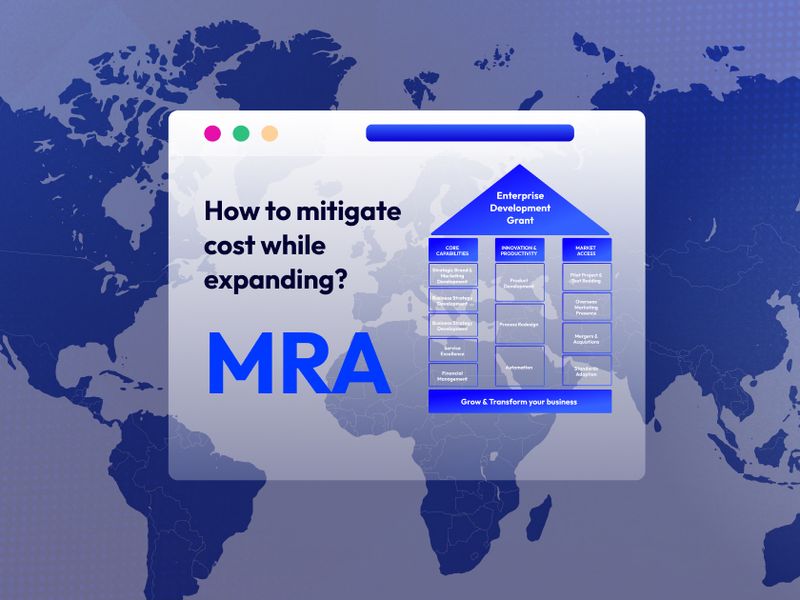
Enterprise Singapore sets the rules and can change them. In general, you need all three of these before your project is assessed.

The grant is run by Enterprise Singapore for companies registered and operating here.

You need to have sufficient funds available to pay for the entire project upfront.

You need a defined project with real deliverables, dates, and outcomes.














We can't wait to hear all about your game-changing ideas. Spill the tea!

Be the first to know on further updates on Growth contents for your organisation, don't miss out on our sneak peaks and exclusive community contents!